
The 7 most common types of plastic and their applications
In the world of plastics, there are countless variations, but which type of plastic is truly suitable for your product? The choice depends entirely on the desired shape, function and durability. In this blog we take you through the seven most commonly used plastics and explain what they excel at and where it’s better to avoid them.
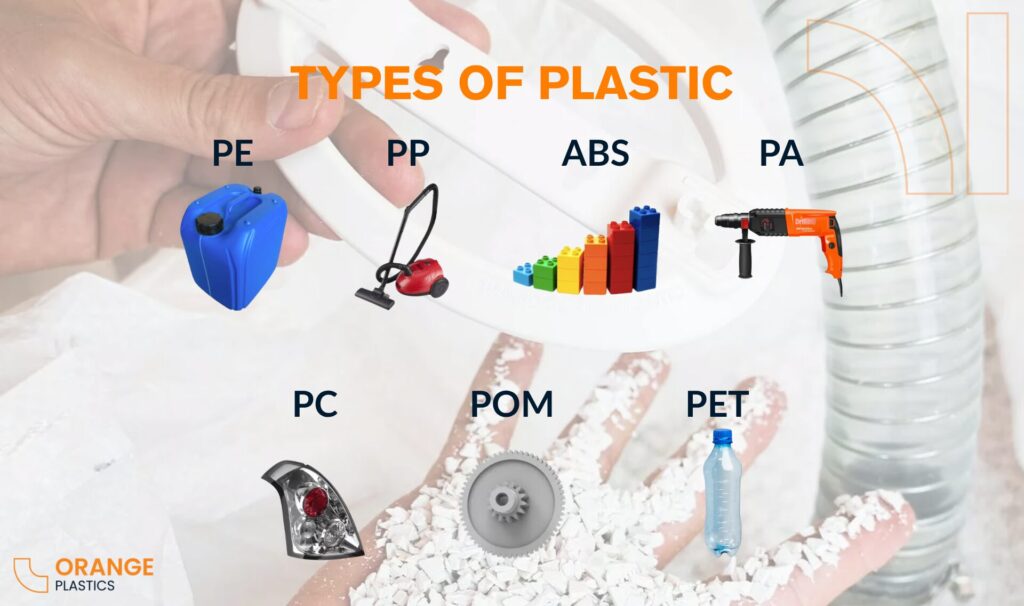
Overview of different types of plastic.
Summary
- The choice of plastic depends on strength, flexibility, heat resistance, chemical resistance and the intended application.
- Selecting the right material prevents issues such as deformation, chemical damage, or wear.
- For technical components such as gears or bearings, plastics are selected based on wear resistance, strength, and dimensional stability, for example POM or PA.
- For consumer products, material choice depends on functionality, flexibility, and appearance, for example PP for household items or PET for packaging.
- Working with an experienced partner such as Orange Plastics helps in selecting the right material and ensuring optimal product performance.
Watch video
Table of contents
1. Polyethylene (PE)
What is PE?
Polyethylene is the most widely used type of plastic worldwide and is commonly applied in injection molding. The material is known for its excellent resistance to chemicals and low temperatures, making it suitable for both industrial and everyday products. In addition, PE is lightweight, tough, and easy to process, which makes it a popular choice for durable and cost-efficient plastic parts.
What is it used for?
PE is used for the following applications:
- Industrial jerry cans
- Ice cube trays
- Packaging and simple consumer goods
Advantages
Advantages
- Strong
- Flexible
- Chemically resistant
- Low cost
Disadvantages
The disadvantages of PE are:
- Not heat resistant
- Prone to scratching
- Quite flexible
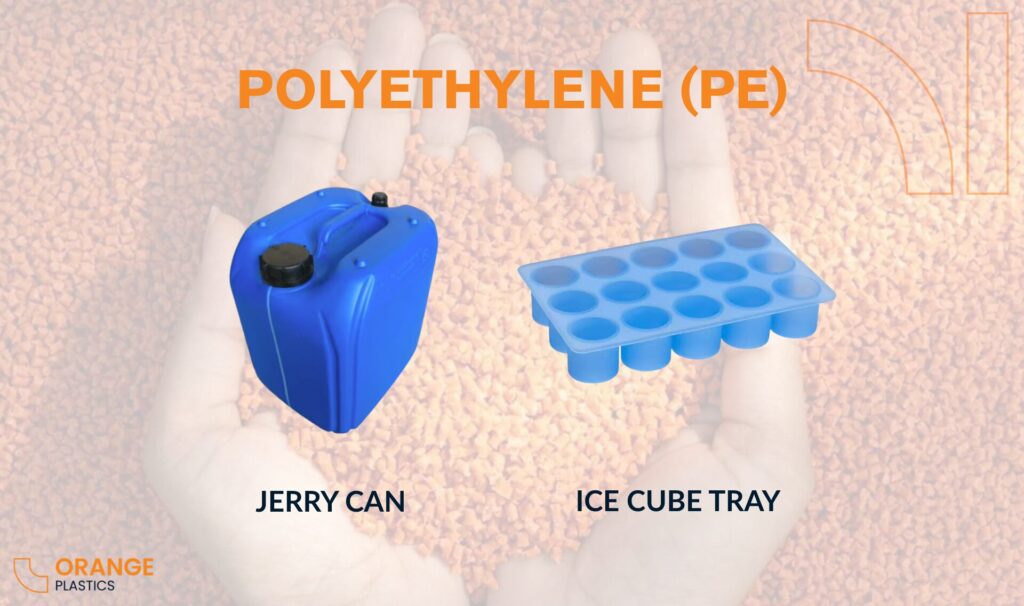
Example: polyethylene plastic (PE).
2. Polypropylene (PP)
What makes PP so special?
Polypropylene is similar to PE, but it is harder, more rigid, and better resistant to higher temperatures. It is chemically resistant, lightweight, and easy to process, making it widely used for both household and industrial products. In addition, PP is relatively inexpensive and highly recyclable, making it a sustainable choice.
Typical applications
PP is used for the following applications:
- Vacuum cleaners
- Coffee machines
- Various household items
Advantages
The advantages of PP are:
- Heat resistant
- Dimensionally stable
- Suitable for functional components
Disadvantages
The disadvantages of PP are:
- UV sensitive
- Risk of deformation under heat
- Quite flexible
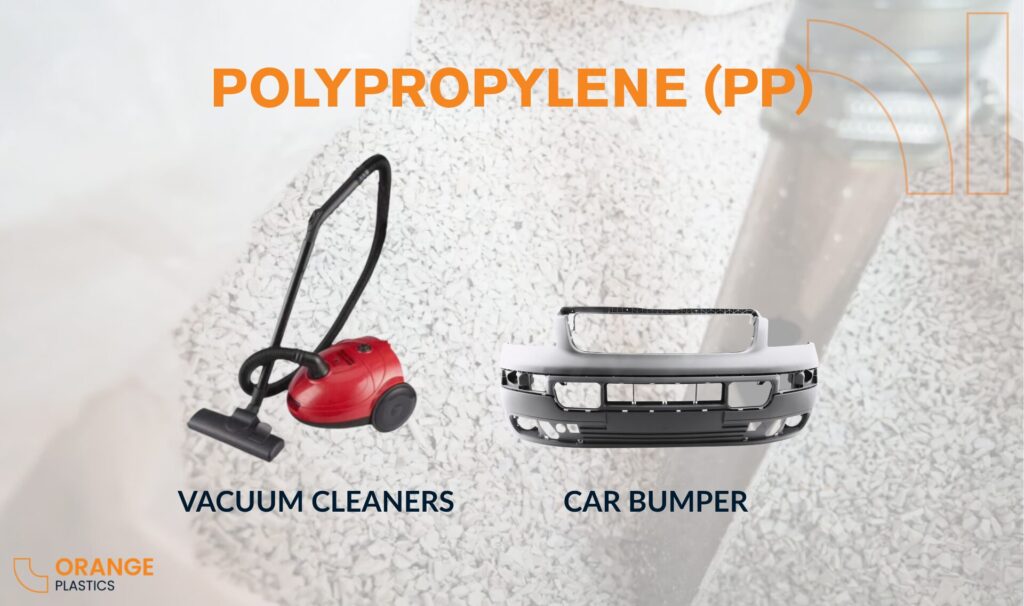
Example: Polypropylene (PP).
3. Acrylonitrile-Butaddiene-Styrene (ABS)
What is ABS?
Acrylonitrile Butadiene Styrene is popular due to its solid structure, impact resistance, and good mechanical properties. It is widely used in consumer products and professional equipment and is easy to process into complex shapes.
Where is ABS used for?
ABS is used for the following applications:
- Electronic housings
- Medical equipment
- Toy building blocks
- Dashboard components
Advantages
De voordelen van ABS zijn:
- Very dimensionally stable
- Strong material
- Can be chrome plated
Disadvantages
The disadvantages of ABS are:
- Not chemically resistant
- UV sensitive
- Prone to scratching
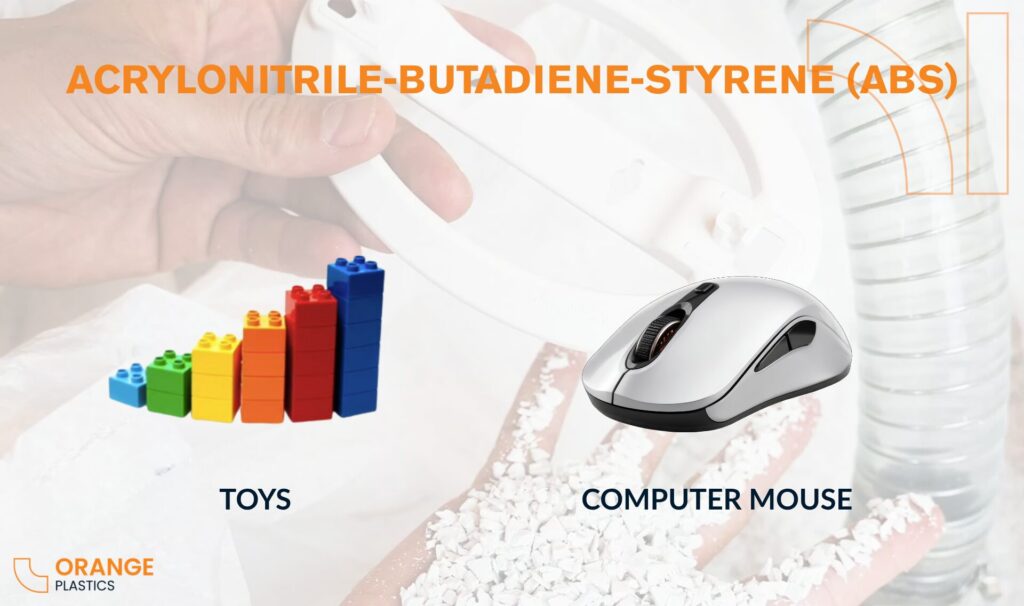
Example: acrylonitrile butadiene styrene (ABS).
4. Polyamide (PA / Nylon)
What is PA?
Polyamide, better known as nylon, is a strong and durable plastic ideal for heavy-duty and demanding applications. The material is wear-resistant, chemically resistant, and mechanically reliable, and is often used for technical components such as gears, bearings, and fasteners.
Applications
Polyamide is used for the following applications:
- Drills
- Medical equipment
- Engine components
- Mechanical parts
Advantages
The advantages of polyamide are:
- High heat resistance
- Wear resistant
- Very strong
- Impact resistant
Disadvantages
The disadvantages of polyamide are:
- Tends to absorb moisture (can be solved by adding glass fiber)
- High processing temperature
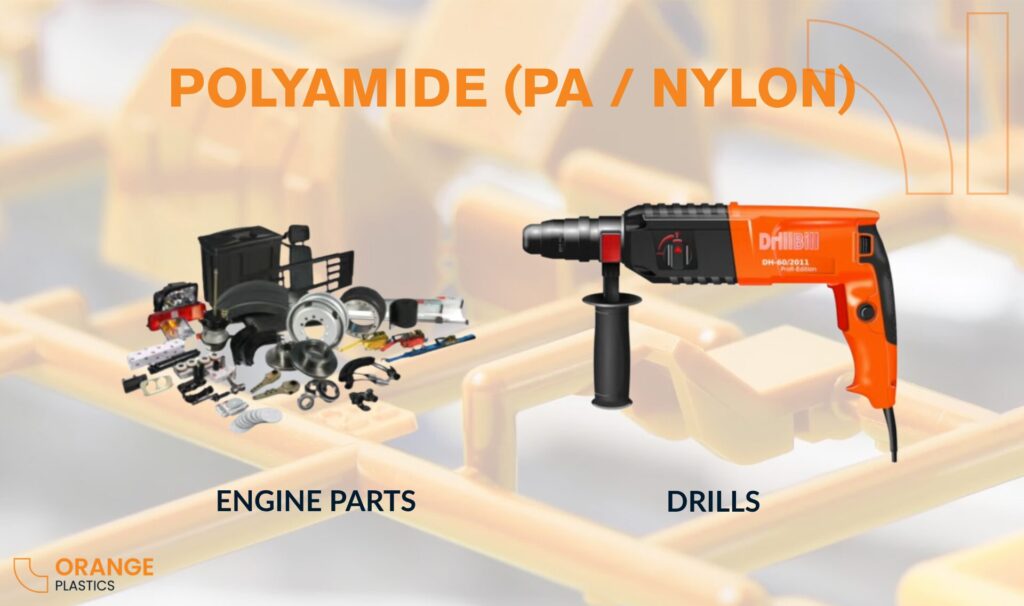
Example: polyamide (PA/NYLON).
5. Polycarbonate (PC)
What is Polycarbonate?
Polycarbonate (PC) is a transparent plastic with glass-like clarity that is both strong and impact resistant. It is widely used in applications where visibility and durability are important, such as safety glazing, electronic housings, and lenses. PC is also easy to process in injection molding and suitable for complex shapes.
Common applications
PC is used for the following applications:
- Street lamps
- Eyeglass lenses
- Car headlights
Advantages
The advantages of PC are:
- High transparent
- Impact resistant
- Excellent for optical applications
Disadvantages
The disadvantages of PC are:
- Limited heat resistance
- High cost
- Sensitive to chemicals
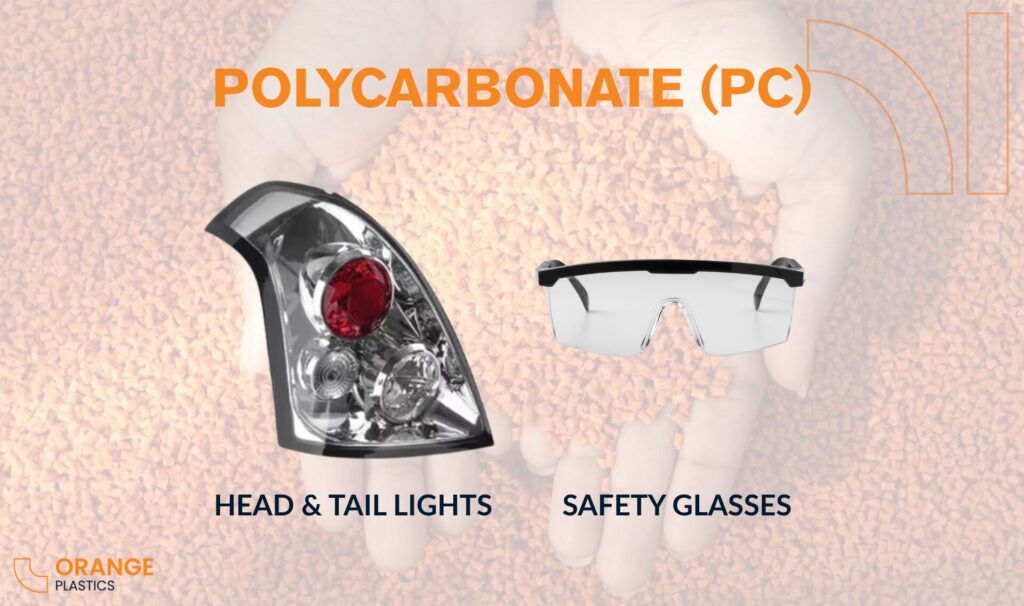
Example: polycarbonate (PC).
6. Polyoxymethylene (POM)
What is POM?
Polyoxymethylene, also known as acetal, is a plastic that stands out for its self-lubricating properties and high dimensional stability. The material is wear-resistant, rigid, and capable of withstanding mechanical stress, making it ideal for precision components such as gears, bearings, and ball bearings. Thanks to its good processability in injection molding and consistent dimensions, POM is highly suitable for both industrial and technical applications.
Applications
POM is used for the following applications:
- Zippers
- Gears
- Snap-fit systems
- Mechanical hinges
Advantages
The advantages of POM are:
- Low friction
- Wear resistant
- Dimensionally stable
Disadvantages
The disadvantages of POM are:
- Limited chemical resistance
- Sensitive to UV light
- Relatively rigid and brittle
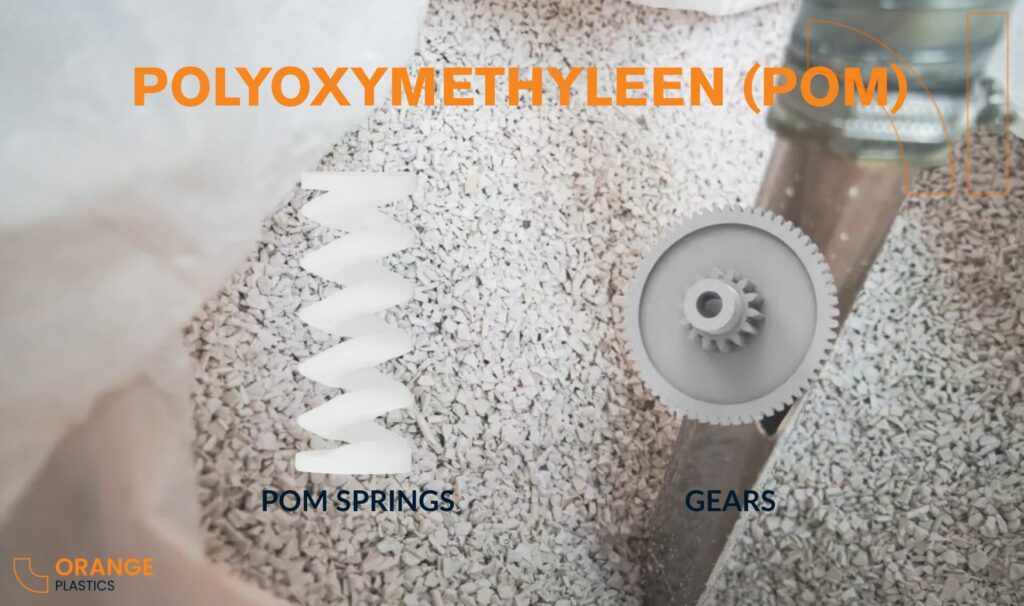
Example: Polyoxymethylene (POM).
7. Polyethylene Terephthalate (PET)
What is PET?
Polyethylene terephthalate is best known as the material used for soft drink and water bottles, but it is also used for food packaging and fibers in textiles. It is lightweight, strong, and transparent, making it ideal for packaging that requires both protection and presentation. In addition, PET is highly recyclable, contributing to sustainability in packaging solutions.
Typical applications
PET is used for the following applications:
- Water bottles
- Food packaging
- Pressure-resistant containers
Advantages
The advantages of PET are:
- Lightweight
- Pressure resistant
- Food safe
Disadvantages
The disadvantages of PET are:
- Not heat resistant
- Sensitive to chemicals
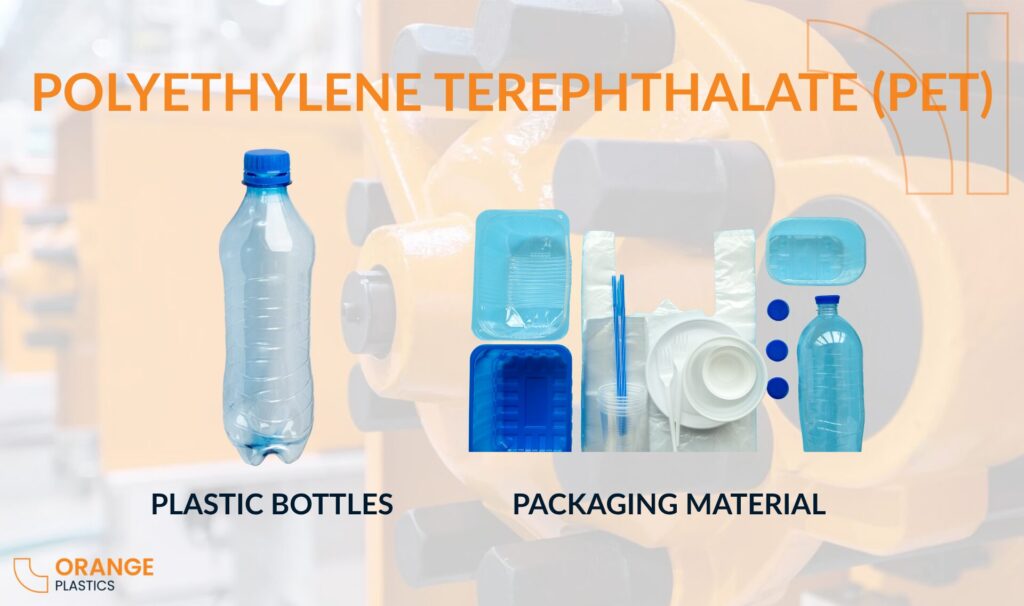
Example: polyethylene terephthalate (PET).
Important point
Choose plastic based on function, not just price. When designing, take into account strength, heat resistance, and chemical resistance to prevent problems and extra costs later on.
How do you choose the right plastic for your product?
When selecting the optimal type of plastic, it is important to consider:
- Should the product be flexible or rigid?
- Does it need to be transparent?
- Must it withstand heat, cold, chemicals, or pressure?
- Is it intended for single use or intensive use?
- Is it intended for one-time or intensive use?
An experienced injection molding partner such as Orange Plastics helps you make the right choice, ensuring your product performs optimally and meets all requirements.
Conclusion
Each type of plastic has its own properties, advantages and limitations. Therefore, carefully consider factors such as strength, flexibility, heat resistance and the intended application of the product. This will give you a clearer understanding of which material is most suitable. It is also important to work with an experienced partner, such as Orange Plastics, to ensure you choose the material that allows your product to perform optimally.
Need your product developed?
Do you have a product idea or want a quick price estimate? Contact us and we will assist you right away.