Orange Plastics
ABS injection molding
What is ABS (Acrylonitrile Butadiene Styrene)?
Injection molding with ABS plastic
Why choose ABS injection molding?
ABS combines processability, strength and a professional appearance. Thanks to its material properties, complex shapes can be produced efficiently and consistently, with high-quality finishing and broad applicability across various markets. Below you will find the key characteristics of ABS injection molding.
1. Cost-efficient to produce
ABS can be injection molded efficiently due to its relatively low melting temperature and stable processing characteristics. This keeps cycle times short and production costs low. Because ABS is widely available, material costs are also favorable.
2. Suitable for complex shapes
Thanks to its good flow properties, ABS easily fills thin-walled and detailed molds. This makes it ideal for products with sharp corners, technical connections or high-end design features. The material delivers consistent results, even with complex geometries.
3. Professional finish
ABS naturally has a smooth surface that immediately provides a high-quality appearance. As a result, little to no post-processing is required to achieve a sleek and professional end product. Painting, printing or coating is also highly effective and ensures premium product presentation.
4. Flexible application across different markets
ABS is used in a wide range of industries, from consumer electronics to automotive and technical equipment. The combination of strength, dimensional stability and ease of processing makes it suitable for both functional components and visible parts. This makes ABS a reliable choice for many product applications.
5. Ideal for medium to large series
ABS offers a high degree of reproducibility, ensuring consistent quality in every production run. This makes the material particularly suitable for scalable production. Even at higher volumes, cycle times remain short and products uniform.
6. Highly recyclable
ABS is a thermoplastic and therefore well suited for mechanical recycling. Residual material and rejected products can be ground and reused in the production process without significant loss of material properties.
The properties of ABS
The advantages of ABS
ABS is a versatile plastic that stands out for its strong, stable and user-friendly properties. The material is widely used because it withstands daily use well and can be easily processed into various shapes and finishes.
Key material properties:
- Impact-resistant: Resistant to shocks and daily use
- Dimensionally stable: Remains stable under temperature changes and load
- Strong & lightweight: Excellent strength-to-weight ratio
- Easy to color and post-process: Suitable for painting, printing and coating
- Good paint adhesion: Excellent bonding with various coatings
- Thermoplastic: Ideal for injection molding and reprocessing
Disadvantages of ABS
ABS is a versatile plastic, but it is not always the best choice for every project. In some cases, other materials may be more suitable depending on the specific application requirements.
- Moderate UV resistance (UV stabilizers required for outdoor use)
- Less chemically resistant than PP or PE
- Not suitable for long-term exposure to very high temperatures
Rigid and flexible components
Which other materials do we use for injection molding?
At Orange Plastics, we work with a wide range of plastics. In addition to ABS, we also process POM, PC, PVC, PP and PE including HDPE, as well as sustainable alternatives such as recycled plastics and bioplastics. Our specialists are happy to advise you on the plastic that best suits your product and production process.
POM
- High stiffness
- Lage wrijvingsweerstand
PC
- Impact resistant
- Transparent
- Strong
PVC
- Wear resistant
- Moisture resistant
- Chemical resistant
PP
- Lightweight
- Flexible
- Chemically resistant
PE & HDPE
- Wear resistant
- Impact resistant
- Moisture resistant
Sustainable ABS injection molding
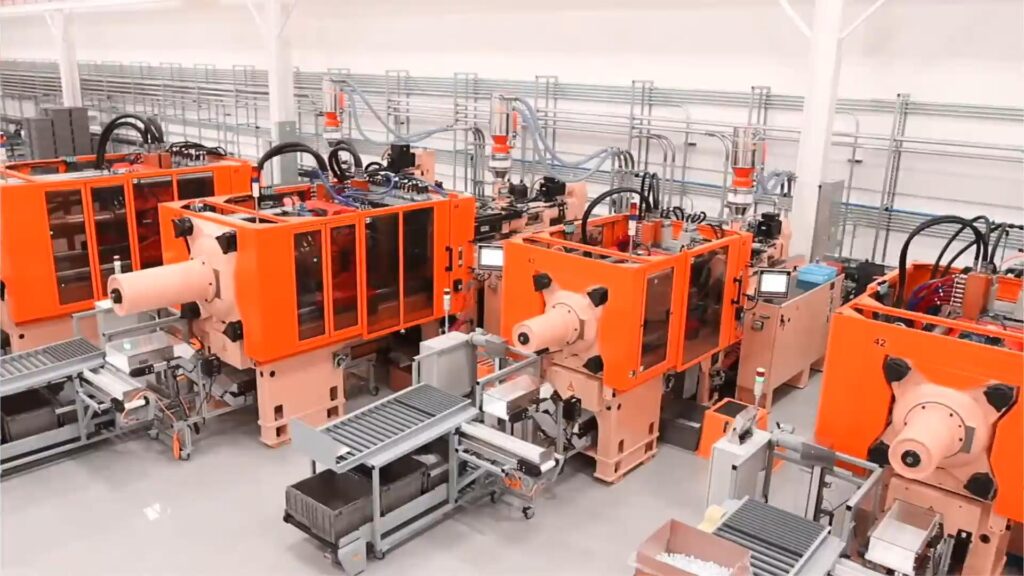
For ABS injection molding, we also take a sustainable approach. We work with energy-efficient, fully electric injection molding machines and use recycled ABS or internally produced regrind wherever possible, without compromising on mechanical properties or product appearance. In this way, we combine the strong characteristics of ABS with environmentally conscious production, delivering high-quality components with a lower ecological footprint.
Methodology
Our services
Your product within 8 to 14 weeks
Costs and
lead times of ABS injection molding
The cost of ABS injection molding is determined by a combination of the design, production volume and the properties of the ABS material itself. ABS is efficient to process and has relatively short cycle times, making it cost-effective in production. At the same time, factors such as the type of ABS, color compound or required surface quality can affect both price and lead time.
Factors influencing the price:
- Type of ABS: standard, high-impact or flame-retardant ABS fall into different price ranges; specialty grades are more expensive
- Color: custom colors, high-gloss finishes and color consistency requirements increase material costs
- Material usage: larger or thicker products require more ABS per part, increasing cost
- Properties & additives: UV stabilizers or impact modifiers improve performance but increase cost
Average delivery times:
- Standard ABS: usually available from stock or within 1–2 weeks
- Special ABS grades or custom colors: 2–6 weeks lead time, depending on availability and formulation
Our cases
Examples of injection molding projects
FAQ
Frequently asked questions about ABS injection molding
ABS stands for Acrylonitrile Butadiene Styrene. It is a thermoplastic that is strong and impact-resistant. ABS can be easily injection molded, which is why it is widely used for products that require precision and a high-quality appearance, such as components for electronics or automotive applications.
ABS is:
- Dimensionally stable
- Impact-resistant
- Easy to color
- Easy to injection mold
This is why ABS is used for technical components and visible parts where a high-quality finish is important.
ABS is used for a wide range of products, such as:
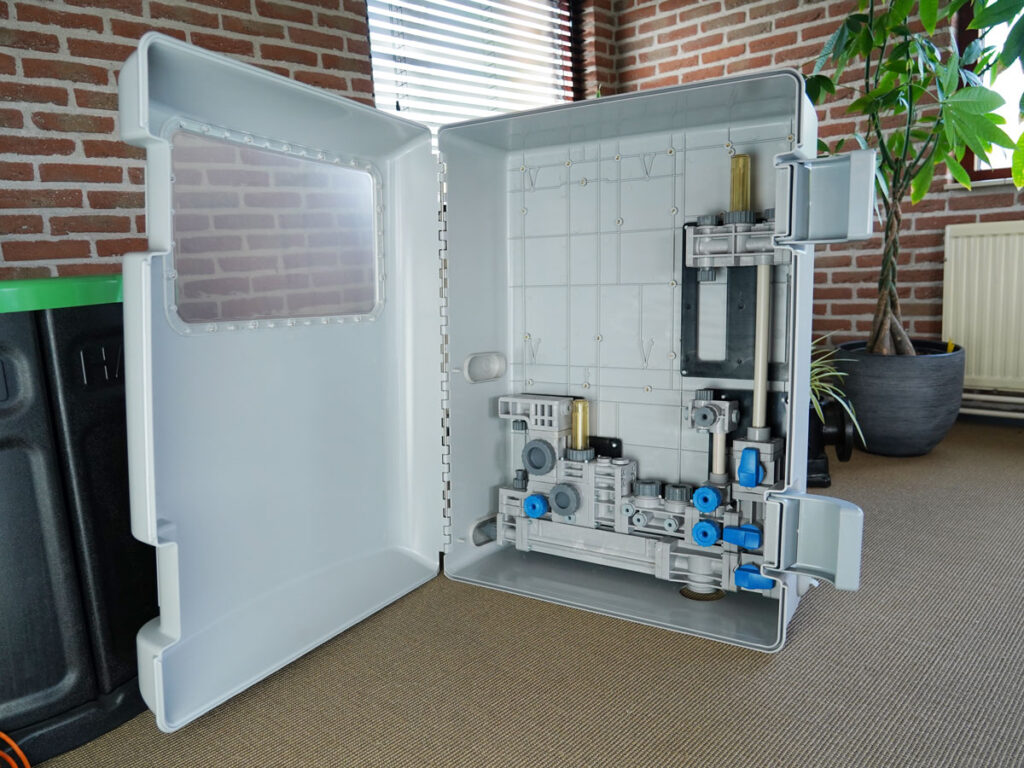
- Device housings
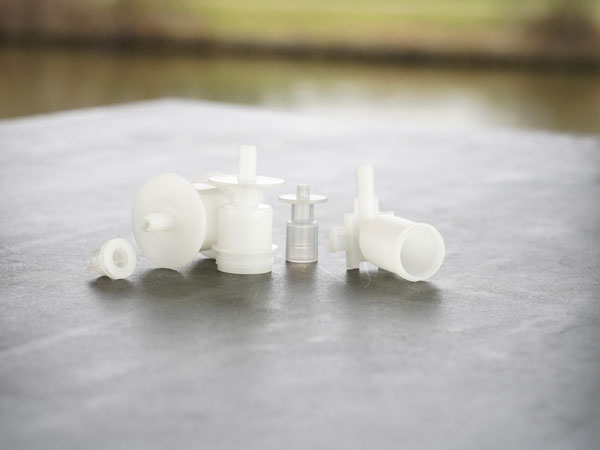
- Technical components and connectors
- Automotive parts such as dashboards
- Consumer products like toys and kitchenware
- Prototypes and components for functional testing
ABS is strong and impact-resistant, but its strength depends on thickness and product design. It withstands shocks and daily use well. The material is lightweight yet sturdy and remains stable under heat and load. For very heavy loads or high temperatures, other plastics may be more suitable.
Orange plastics
Turn your product idea
into reality?
Testimonials
Clients of Orange Plastics
Our experience with Orange Plastics is very positive. Their expertise in 3D modeling, injection mold development and production, and injection molding itself is impressive. The flexible and thoughtful approach - from development to assembly - has helped us enormously in the success of our project. All in all a great club to work with!
Sylvan Boonstra
The collaboration with Orange Plastics went smoothly from the beginning to the end of our project because the lines are very short and they can switch quickly. In addition, they deliver good quality products within the tight deadline. All in all, a company that we can definitely turn to for future projects!
Julia van Bloois
Very fast and quality service. We will definitely come back for our next project.
Jen Rossey
Good service and generous thoughts. Even after the product has been delivered, they continue to help.
Dennis Bartels
Excellent cooperation with Orange Plastics during the development and production of our product. Together we developed a beautiful, high-quality product. In short, a nice company to do business with.
Cornelis van der Kuijl