How does an injection molding machine work?
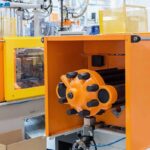
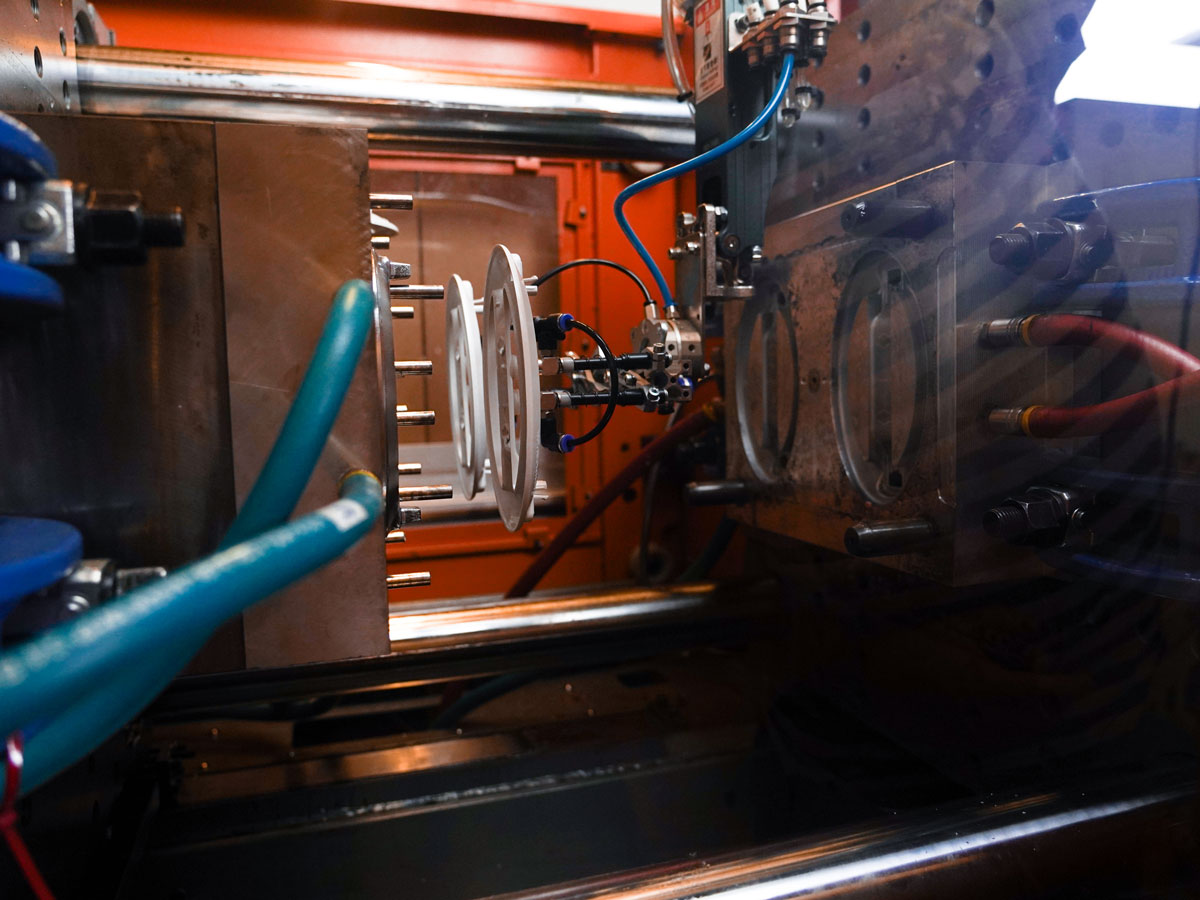
An injection molding machine functions as a large press that holds a mold closed while liquid plastic is injected into the cavity. Thanks to this precision, complex and uniform plastic products can be produced in high volumes. In this blog, we explain how an injection molding machine works, what the most important parts are, and what to look out for in production planning.
Summary
- An injection molding machine produces plastic products by injecting molten plastic into a mold under high pressure.
- The machine consists of essential parts such as the hopper, heating unit, and injection screw.
- The injection molding process follows fixed steps: closing, injecting, high pressure, cooling, and ejecting.
- Clamping force is a crucial factor that determines whether the mold remains closed and the product is formed correctly.
- Injection molding is particularly cost-efficient at larger volumes, but thanks to modern techniques, it can also be profitable for smaller series.
Watch video
Table of contents
The basic components of an injection molding machine
An injection molding machine roughly consists of three parts:
- Hopper (funnel): this is where the plastic granules are fed in.
- Heating unit: heats the plastic into a liquid form.
- Plunger: pushes the liquid plastic into the mold.
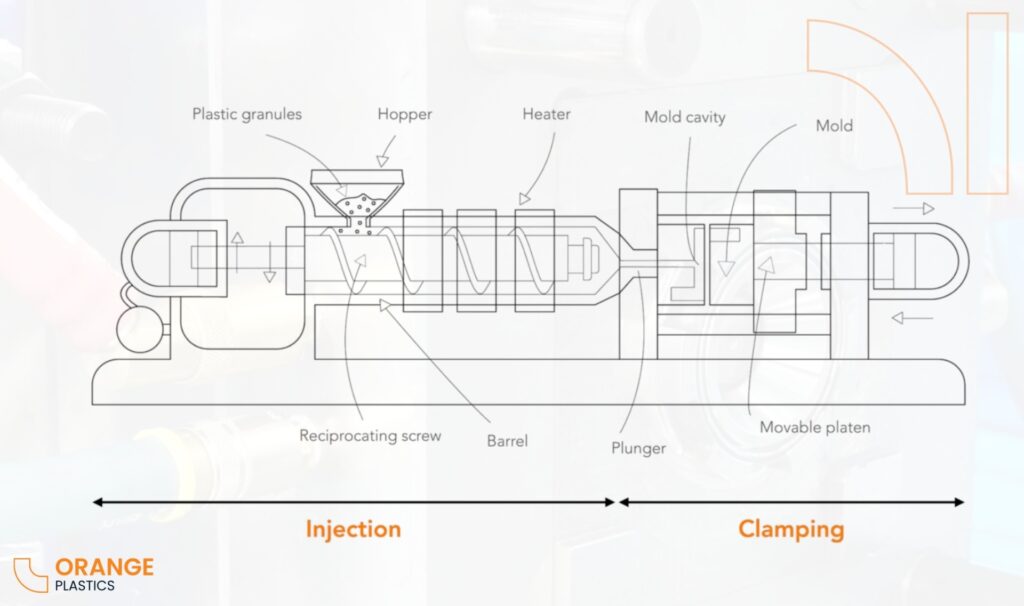
The components of an injection molding machine.
The injection molding process: the injection cycle
Creating a plastic product involves a series of steps, known as the injection cycle:
1. Closing the mold
The mold is closed tightly so that the liquid plastic can be injected under high pressure.
2. Injection of the plastic
The liquid polymers are injected into the mold cavity until it is completely filled.
3. Maintaining pressure
he machine maintains pressure to compensate for the shrinkage of the material.
4. Preparing the next injection
After injecting, the screw rotates plastic forward while simultaneously rotating back to take in material from the hopper and prepare it for the next injection.
5. Cooling and ejection
After cooling, the mold is opened and the ejector rod pushes the product out of the mold.
Important point
A common mistake in injection molding is that clamping force and plastic choice are only considered late in the process. By aligning these factors as early as the design phase, you prevent production errors, unnecessary costs, and delays in the production process.
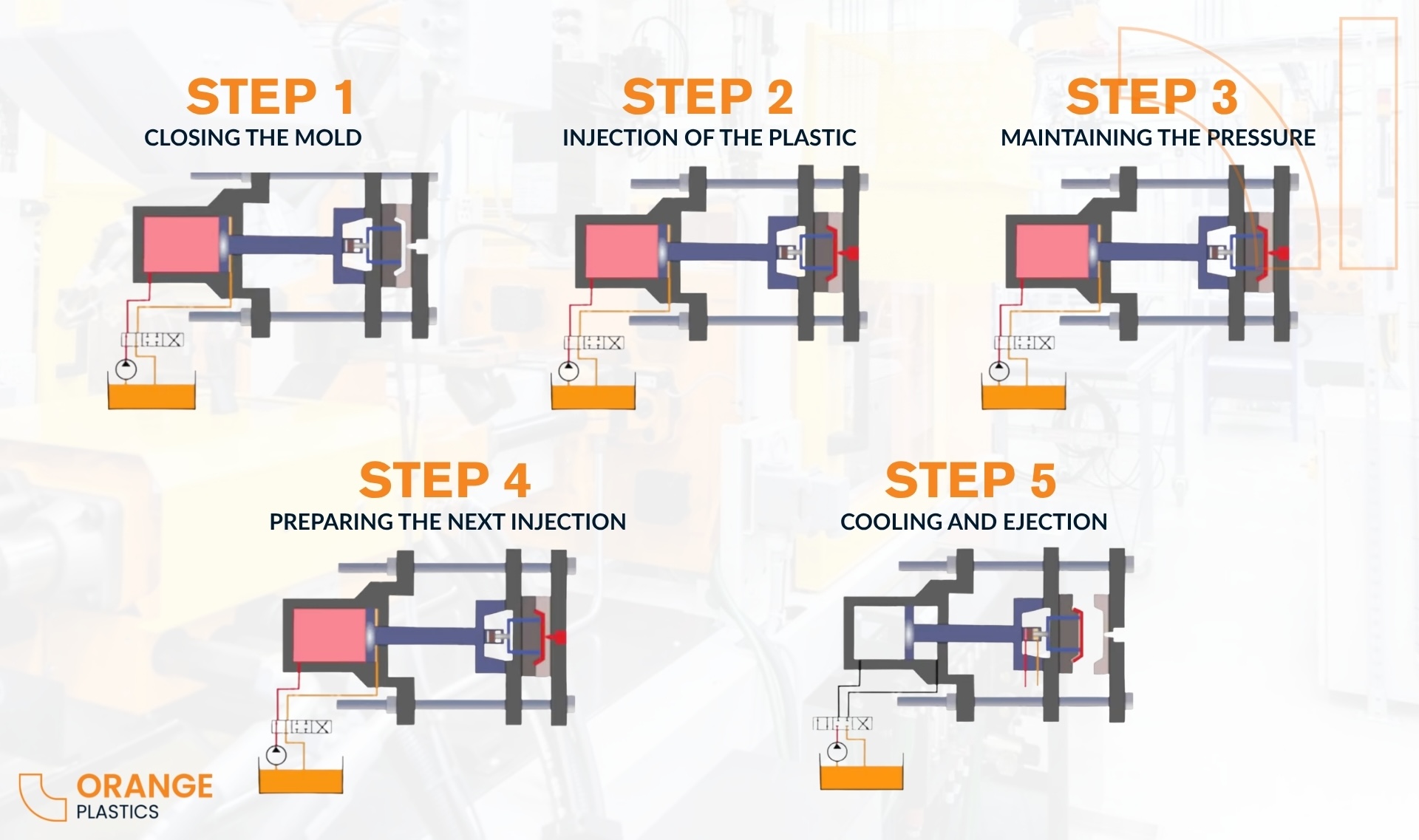
The five steps of the injection molding process.
Differences between injection molding machines
Injection molding machines can differ greatly in capacity and application. One of the most decisive factors is the clamping force of the machine. This property directly influences the quality of the end product and determines which type of mold and plastic can be processed safely and efficiently. This chapter explains exactly what clamping force entails, why it is so important, and how you can determine the required clamping force.
Clamping pressure (clamping force)
The most important difference between machines is the clamping pressure, the force that keeps the mold closed during injection. This can vary from 5 tons to more than 3,000 tons.
- Insufficient clamping force can lead to leakage or incomplete products.
- The required pressure is determined by the surface area of the product and the type of plastic.
Rule of thumb
Multiply the surface area in square inches by 2.5 and add a 10% safety margin. Stiff material often requires higher injection pressure.
What production volume is needed for injection molding?
Injection molding is ideal for large numbers of identical products due to the low average production costs per piece. Although start-up costs (such as the mold) are high, you benefit from significant savings at larger volumes.
Low-volume injection molding
Thanks to modern optimizations, injection molding can now also be efficient for smaller runs. Projects can be profitably produced starting from 1,000 units.
How do you choose the right mold and material?
An experienced injection molding partner helps in selecting:
- The right mold design
- The optimal plastic material
- The best production parameters for the desired volume
This ensures a reliable production process, regardless of the number of pieces.
Conclusion
Injection molding is an efficient and accurate production process for plastic products. Insight into how the machine works, the injection process, and factors such as clamping force, material choice, and production volume is essential for a reliable end result. With the right knowledge and an experienced partner, injection molding can be a cost-effective solution for both small and large series.
Need your product developed?
Do you have a product idea or want a quick price estimate? Contact us and we will assist you right away.