Injection molds: design and production of your plastic product
An injection mold determines the final shape of a plastic product. This shape directly influences the appearance and functionality of every component. This blog explains how injection molds work, how they are produced, and the different types that exist.
Summary
- A mold is a steel form that defines the appearance of a plastic product.
- The process starts with injecting molten plastic and ends with ejecting the hardened product.
- Everything begins with a smart 3D design for all details.
- Machines create the mold with extreme precision from steel or aluminum using CNC machining.
- The choice of material depends on production volumes and the available budget.
Watch video
Table of contents
How does an injection mold work?
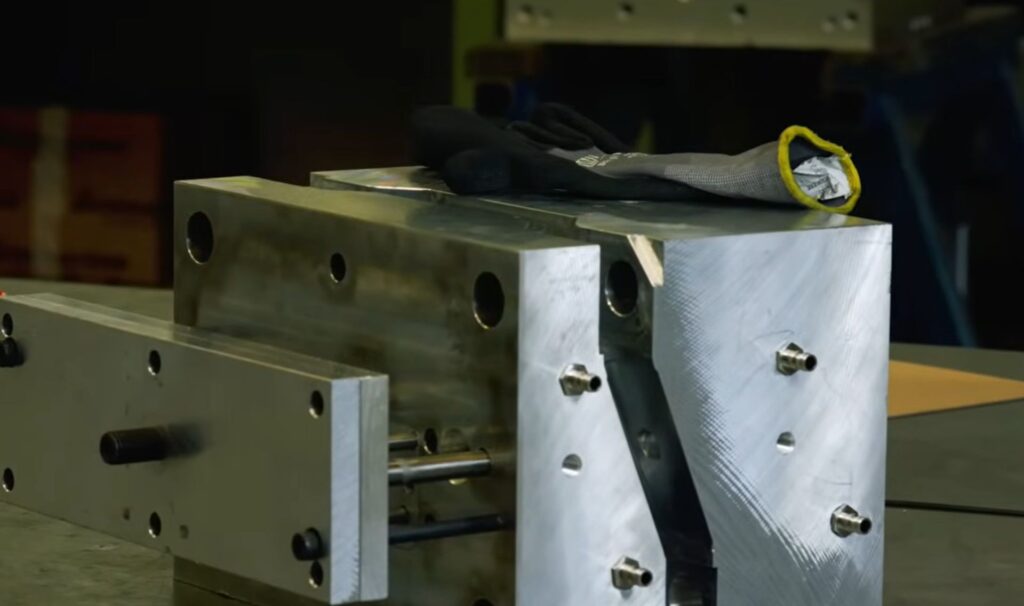
Injection molding is a technique used to quickly produce large quantities of the same plastic product. Examples include bottle caps or automotive parts. The most critical component is the mold in which the injection molding takes place. This is a strong steel form into which liquid plastic is injected to create a solid product.
From injection to ejection
A mold consists of various parts that work together for a smooth process. Here is how it works:
- Injection: First, liquid plastic is injected into the mold.
- Gating and mold cavity: The plastic then flows into the cavity with the correct shape.
- Curing and opening: Once the plastic has solidified, the two parts of the mold open.
- Ejection: Special pins push the product out of the cavity.
- Repeat: The pins retract, and the mold is ready for the next round.
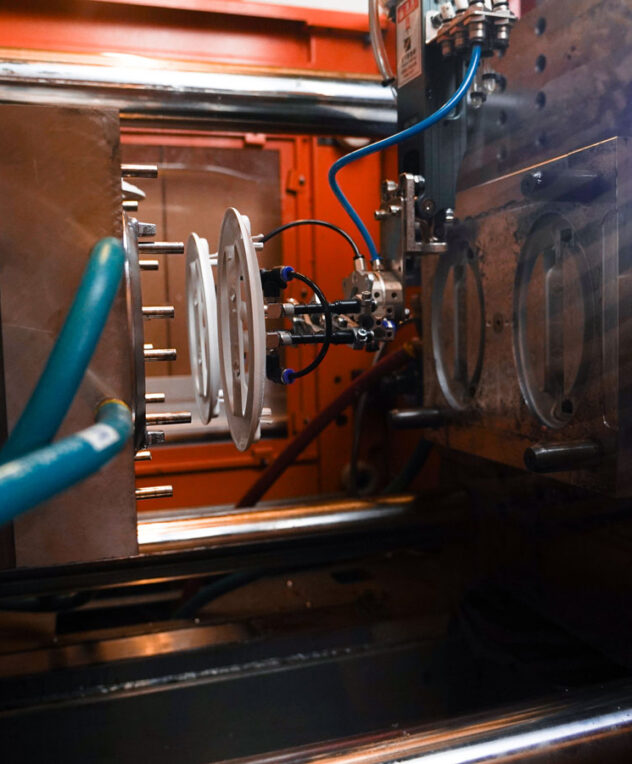
Production phase: the mold opens and the ejector pins push the hard plastic product out.
How are molds made?
Making a mold is a craft where precision is central. Because any error in the mold is immediately visible in the final product, the production process follows three careful steps.
1. 3D design
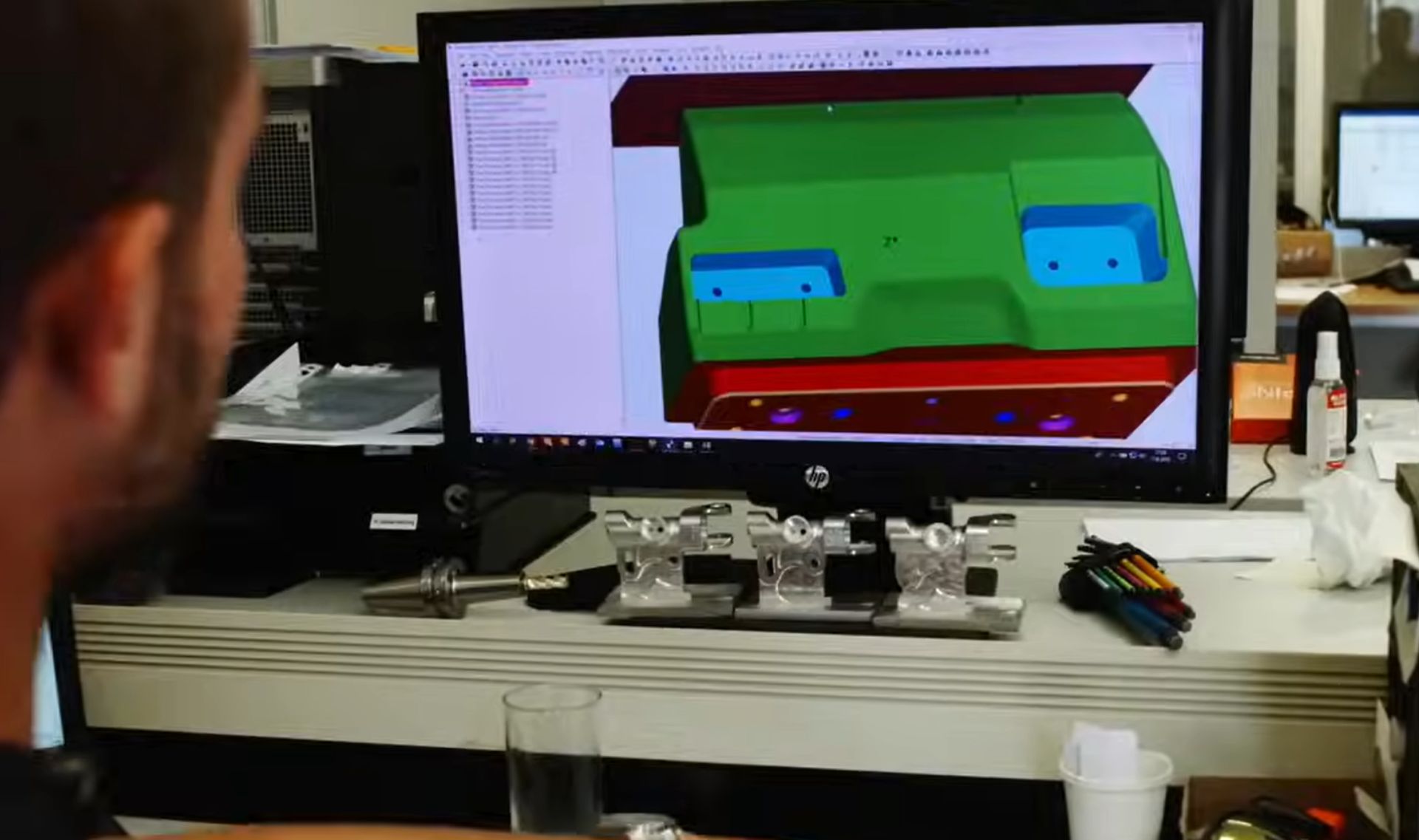
The process starts with a detailed 3D design on the computer. This plan determines exactly what the shape looks like and how the machine must operate.
During this phase, the following essential factors are established:
- Size: How large does the metal form need to be?
- Filling: Where exactly does the liquid plastic enter?
- Parting line: Where do the two halves of the form meet?
- Ejection: How will the product be neatly pushed out of the mold?
- Quantities: Is one product made at a time, or multiple simultaneously?
2. CNC machining
Once the design is ready, large machines begin working on a block of steel or aluminum. This is called CNC machining, which stands for Computer Numerical Control. This means a computer controls the machines with high precision based on numerical codes.
This happens in two main steps:
- Roughing: The machine first drills and mills the large shapes out of the metal. You can compare it to a sculptor carving a rough shape out of a rock, but using extremely strong drills.
- Finishing: Then it is time for the precision work. The machine creates the smallest details, such as very thin holes, sharp edges, and a smooth surface. Everything must be accurate to the millimeter, as this determines how sleek your product looks.
3. Assembly and first-out-of-tools
After the machines are finished, all individual parts of the mold are assembled by hand. However, thousands of products are not made immediately; a first-out-of-tools test is performed first. During this test, it is checked whether the mold closes properly, the plastic reaches everywhere, and the product falls neatly out of the form. Only when everything functions perfectly does the actual production start.
Different types of molds
Not every product requires the same type of mold; the choice is vital. This decision influences both the investment costs and the lifespan of the mold.
Material choice
Most molds are made of steel or aluminum. View the types of materials and the applications they are suitable for below:
- Steel molds: These are super strong and last a very long time. They can handle millions of production cycles but are more expensive to manufacture.
- Aluminum molds: These are cheaper and ready for use faster. However, they wear out more quickly, making them better suited for smaller series.
Advanced molds
Sometimes a standard mold is not enough. For example, for products with two colors or two types of plastic, like a toothbrush with a soft grip. For these, 2K molds are used.
Advantage: Multiple components are produced in a single process, eliminating the need for post-processing or assembly. This saves time and increases production efficiency.
Disadvantage: A higher investment is required. Both the mold and the necessary machinery are more complex, leading to higher costs.
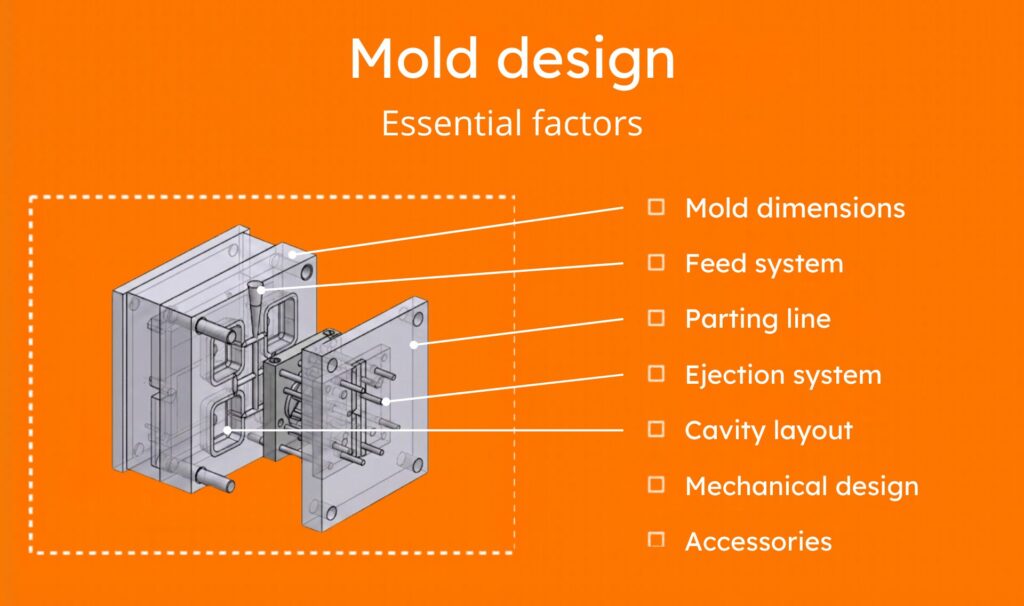
The essential factors when designing a mold.
Choose the right mold for your product
There is no “perfect” mold that works for everyone. The best choice always depends on your specific situation:
- Shape and Function: How complex is your product’s design?
- Speed: How many products do you need per hour or day?
- Costs: What is the maximum allowable cost for a single product?
An experienced partner like Orange Plastics helps you make these choices. By finding the right balance between quality and cost, you get the most out of your investment.
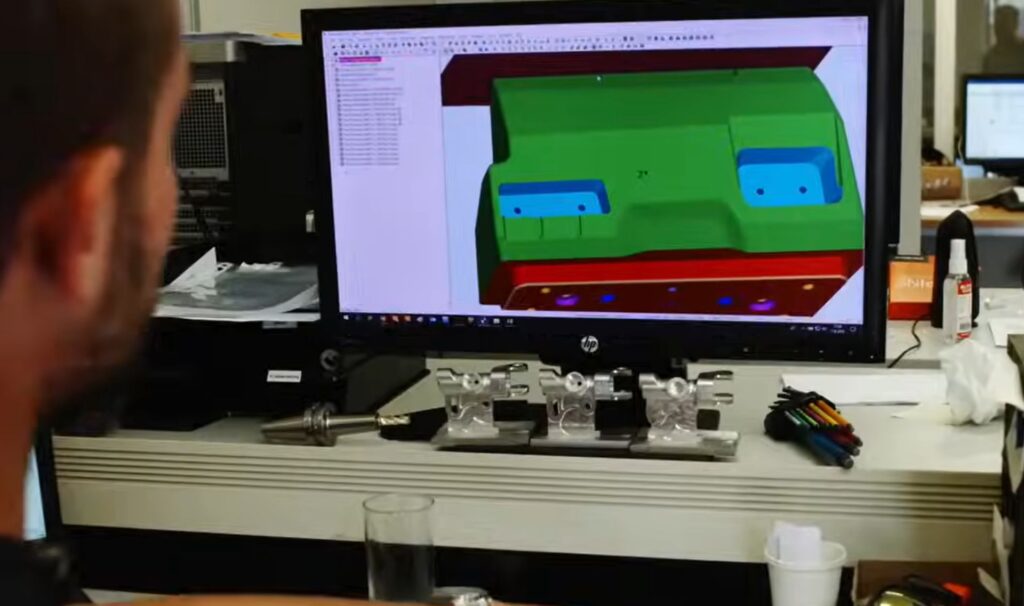
Perfectioning the 3D design of your mold.
Conclusion
The design and production of a mold are crucial for a high-quality plastic product. Every step matters, from creating the 3D design to assembling the final tool. Careful consideration regarding material and design allows for long-term efficient production and significant cost savings.
Need your product developed?
Do you have a product idea or want a quick price estimate? Contact us and we will assist you right away.