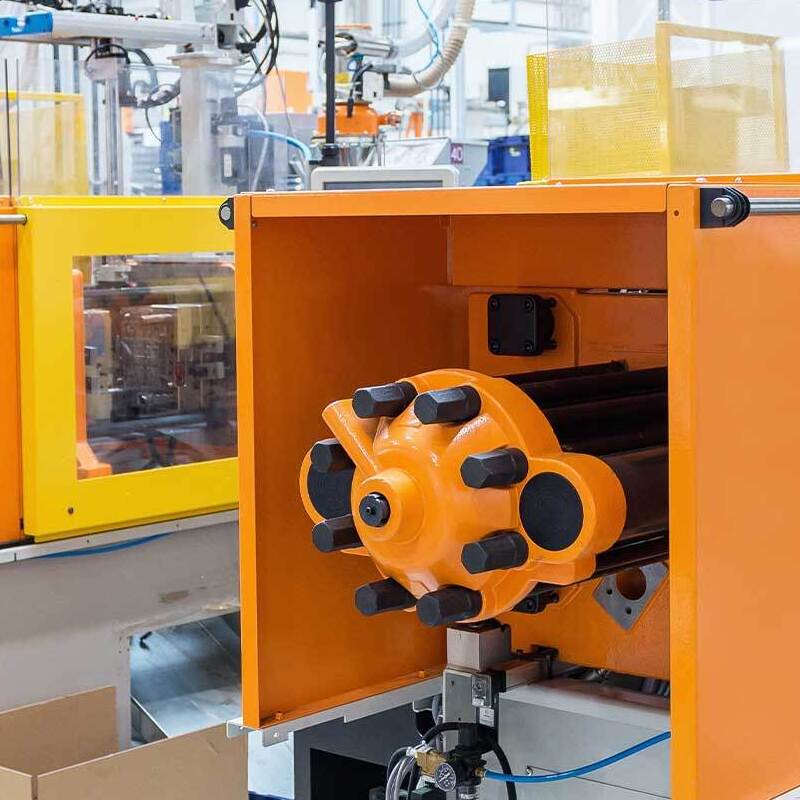
What is injection molding? An introduction to plastic production
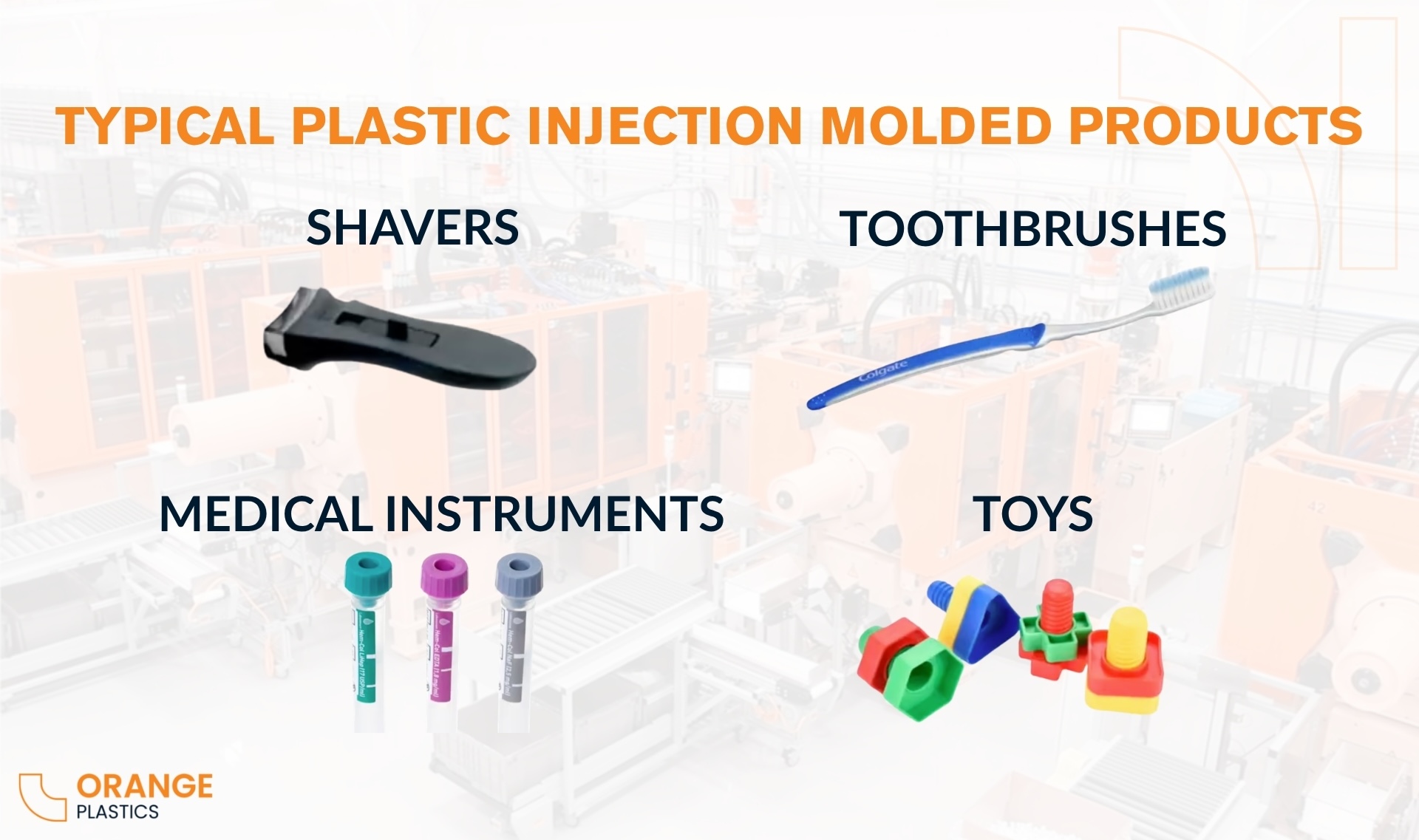
Injection molding is the most commonly used production method for creating plastic products. From toothbrushes and pan handles to toys and medical equipment: many everyday products are manufactured thanks to injection molding. In this blog, we explain how injection molding works, when to apply it, and what types of products can be made with it.
Summary
- Injection molding is a globally applied production technique for plastic products.
- The process consists of melting, injecting, cooling, and ejecting.
- Design choices influence quality, strength, and cost price.
- High volumes, speed, and design freedom make the process efficient.
- Suitable for small and large series, from consumer goods to medical products.
Watch video
Table of contents
How does injection molding work?
Injection molding is a widely used production technique where plastic parts are made accurately and efficiently in large quantities. The process ensures consistent quality and is suitable for both simple and complex shapes. But how exactly does the injection molding process unfold? We explain it in these 5 clear steps.
1. Melting the plastic granulate
The process begins with plastic granules (granulate) placed into the hopper of the injection molding machine. These granules are transported through a heated cylinder. The combination of heat and friction melts the plastic into a liquid mass.
2. Injection into the mold
Once the plastic is fully melted, it is injected under high pressure into a closed mold. This mold has the exact shape of the end product. The high pressure ensures that the molten plastic fills all details and corners of the mold.
3. Cooling and hardening
After injection, the cooling process begins. The mold is cooled, causing the plastic to solidify and take its final shape. The cooling time depends on the type of plastic and the thickness of the product.
4. Opening the mold
When the product has cooled and hardened sufficiently, the injection molding machine opens the mold. The molded plastic part is now ready to be removed from the mold.
5. Ejecting the product
With the help of ejector pins, the product is automatically pressed out of the mold. In many cases, the part is immediately ready for use, although post-processing may sometimes be necessary, such as:
- Removing burrs (flash)
- Assembling multiple parts.
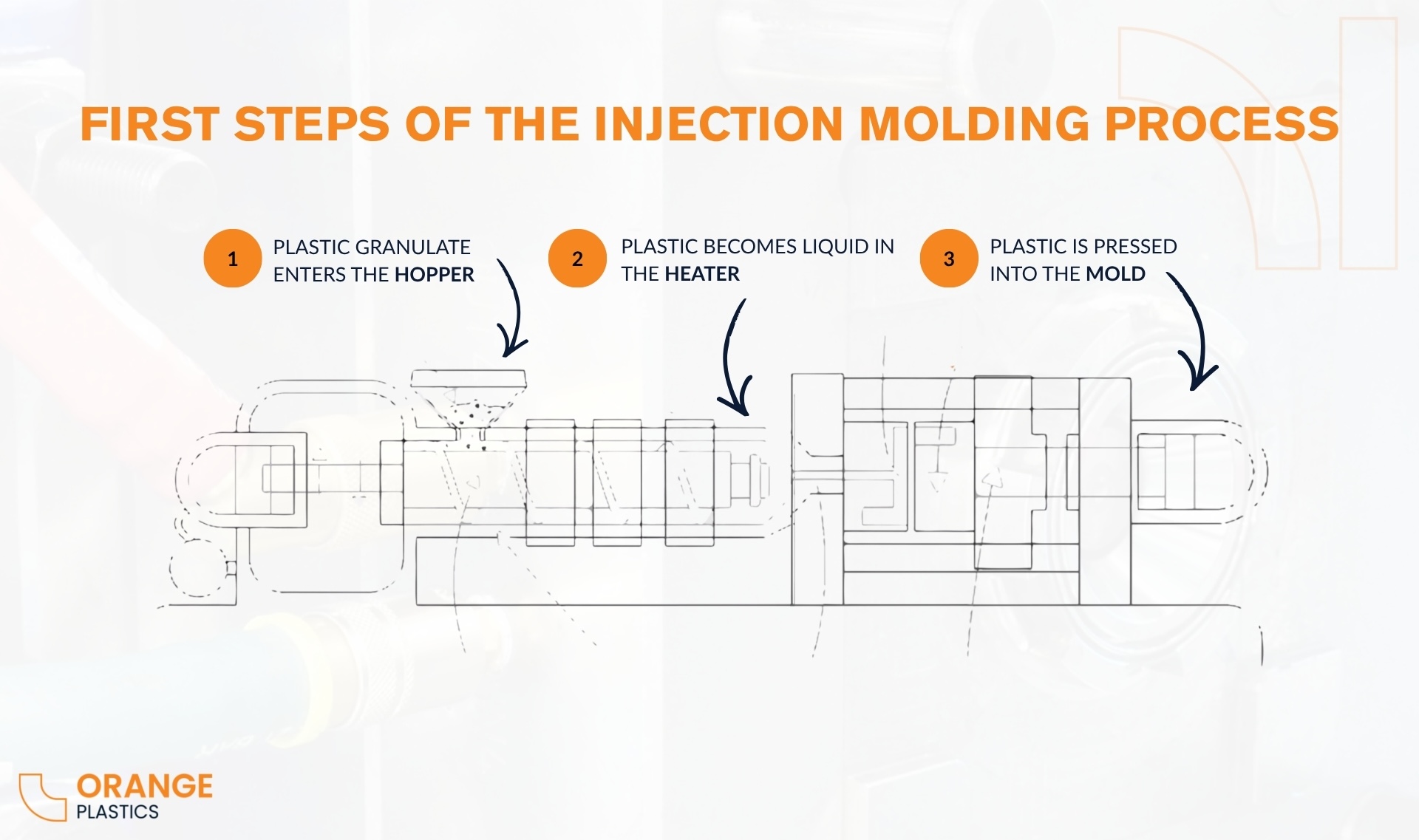
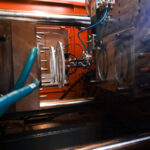
The first steps of the injection molding process.
Note: design determines success in injection molding
In injection molding, product design is at least as important as the production process itself. Wall thicknesses, angles, and draft directions directly influence the quality, strength, and cost price of the end product.
A design that is not optimized for injection molding can lead to deformation, air inclusions, or higher production costs.
How do you choose the right mold and machine?
Choosing the right mold and injection molding machine is essential for an efficient production process and a high-quality end product. An important factor here is the size and complexity of the product.
- Large products:
Large or thick plastic products require an injection molding machine with high clamping force and injection pressure. Additionally, a large and robust mold is needed to absorb the forces during injection molding and prevent deformation. - Small products:
Smaller and lighter products can be produced with a more compact mold and a machine with lower clamping force and injection pressure. This often results in lower production costs and more efficient energy consumption.
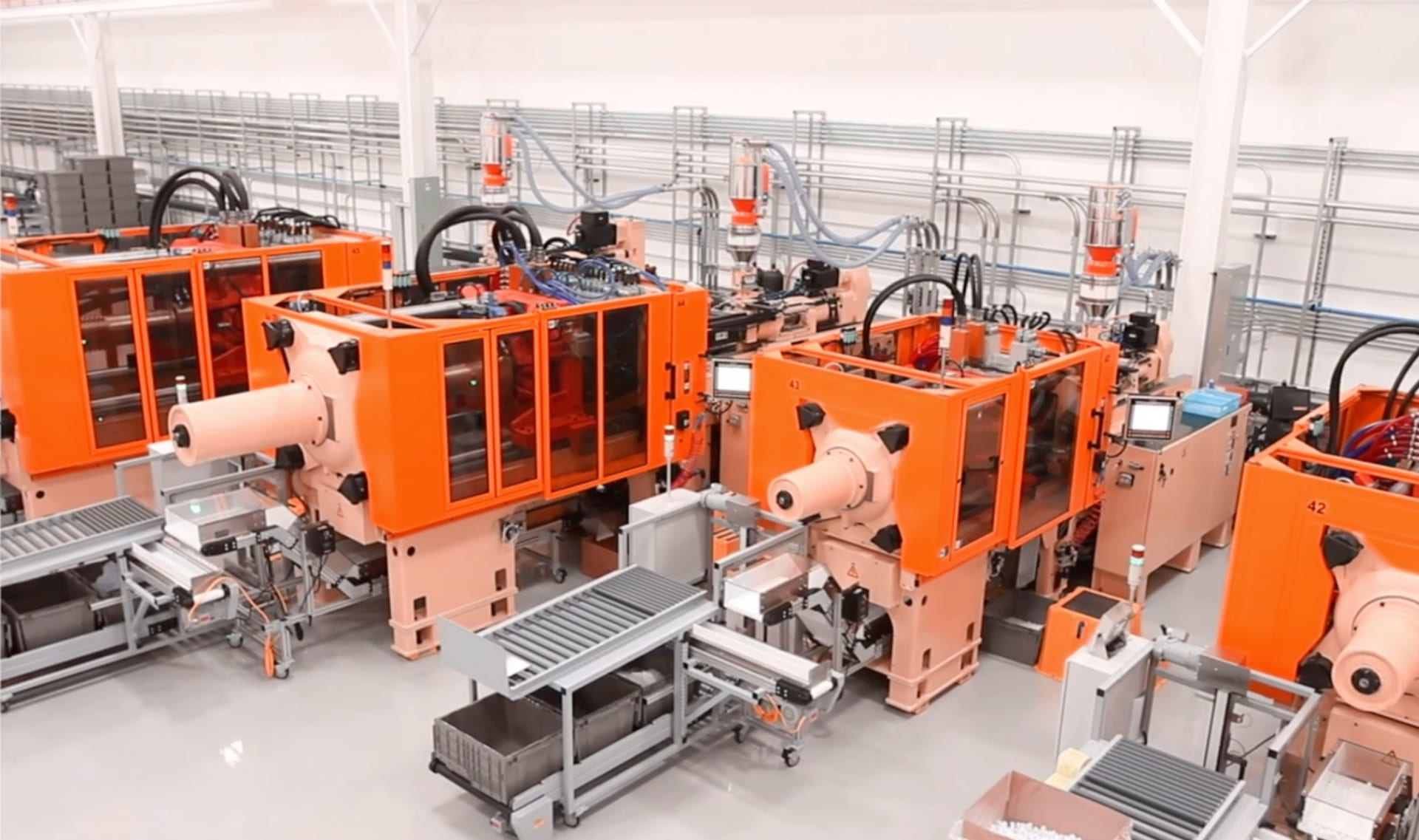
Injection molding machines of various sizes.
Advantages of injection molding
Injection molding offers several key advantages that make the process particularly suitable for serial production of plastic parts. From high production speeds to great design freedom and a wide choice of materials: each advantage contributes to an efficient, flexible, and cost-effective production process. Below, we discuss the main advantages of injection molding
High volumes and speed
Injection molding makes it possible to produce large quantities of plastic products quickly and efficiently, often multiple units at a time. This is much faster than traditional techniques such as metal or woodworking. This makes injection molding ideal for mass production without compromising on quality.
Design freedom
A major advantage of injection molding is the extensive design freedom. Thanks to specially designed molds, plastic products can be made in almost any desired shape, including complex details and integrated functions like threads. This makes it possible to combine multiple parts into a single product, making the production process more efficient and often more cost-effective.
Material choice
In injection molding, you can choose from a large variety of plastics, allowing both the shape and function of the product to be precisely tuned. This makes it possible to produce parts that are strong, flexible, or heat-resistant, depending on the application. This way, the choice of material offers a lot of freedom in design and functionality.
You can choose from, among others:
- ABS
- Polypropylene
- Polyethylene (PE and HDPE)
- Polyoxymethylene (POM)
- Polycarbonate
- PVC
- Recycled plastics
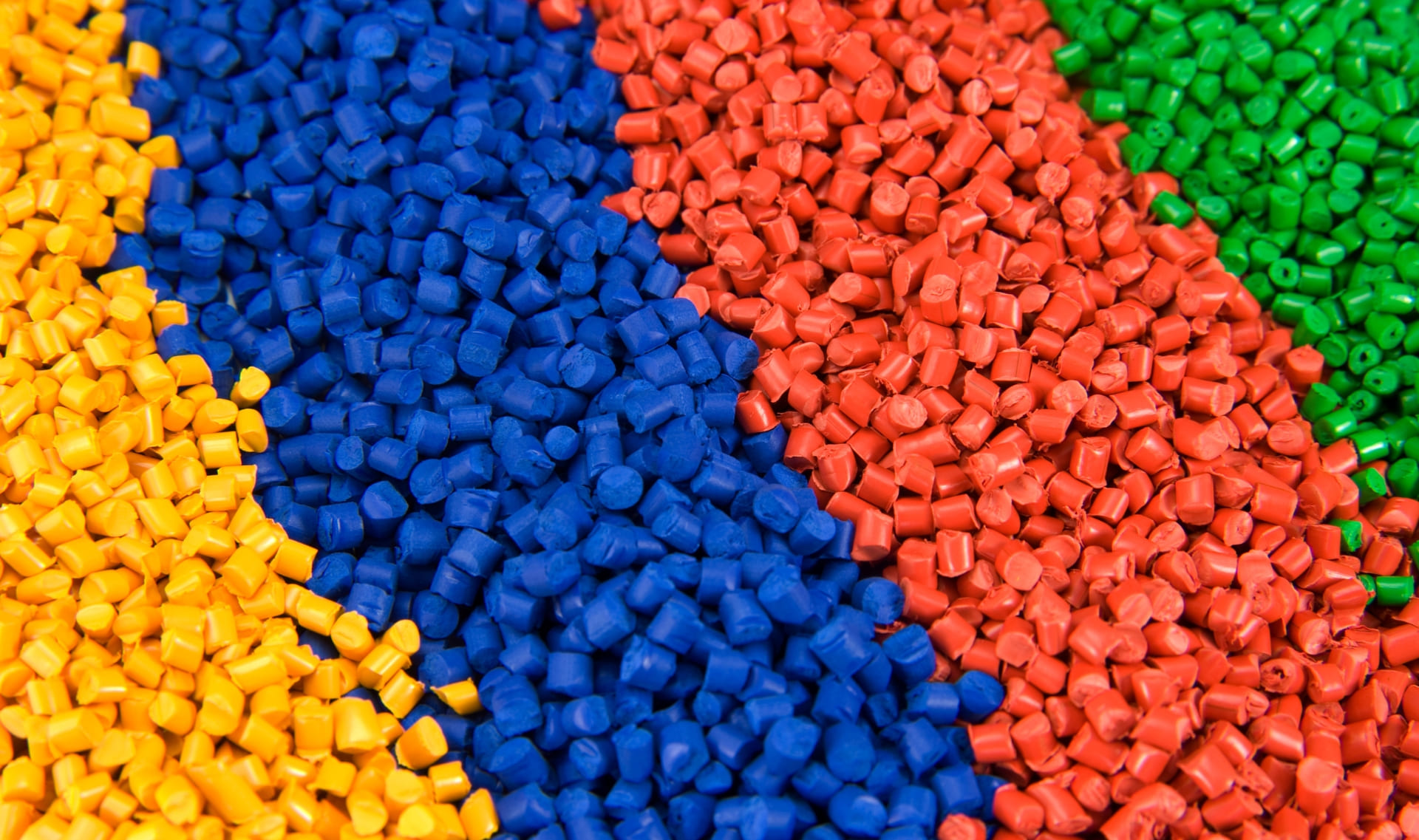
Plastic granulate in various base colors.
Applications of injection molding
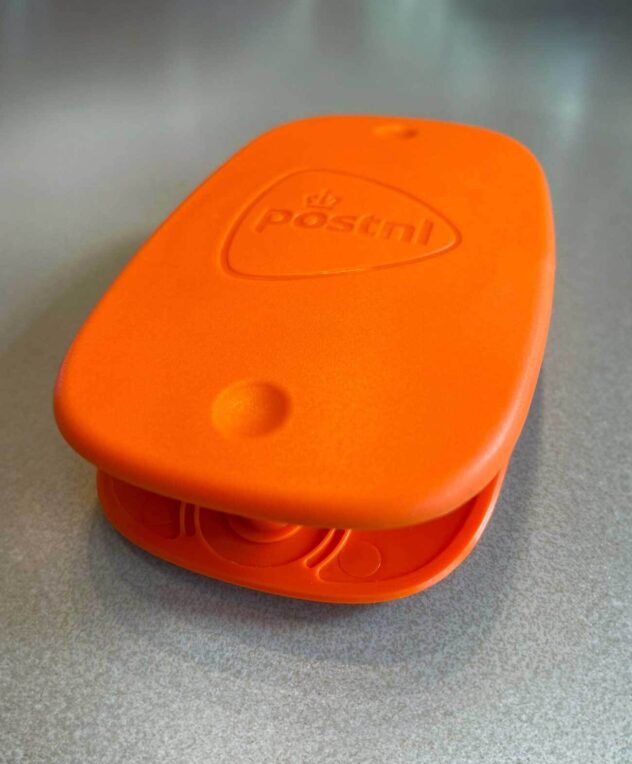
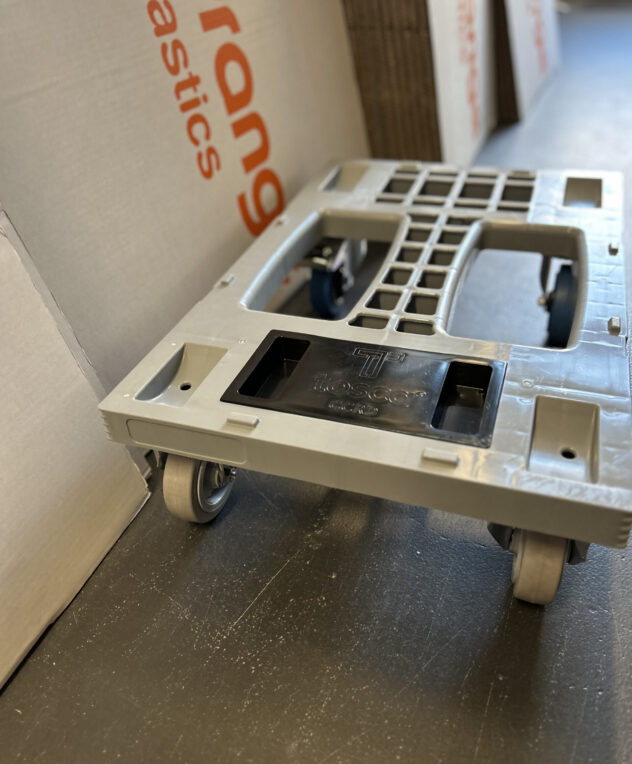
Injection molding is used for an enormous range of products, for example:
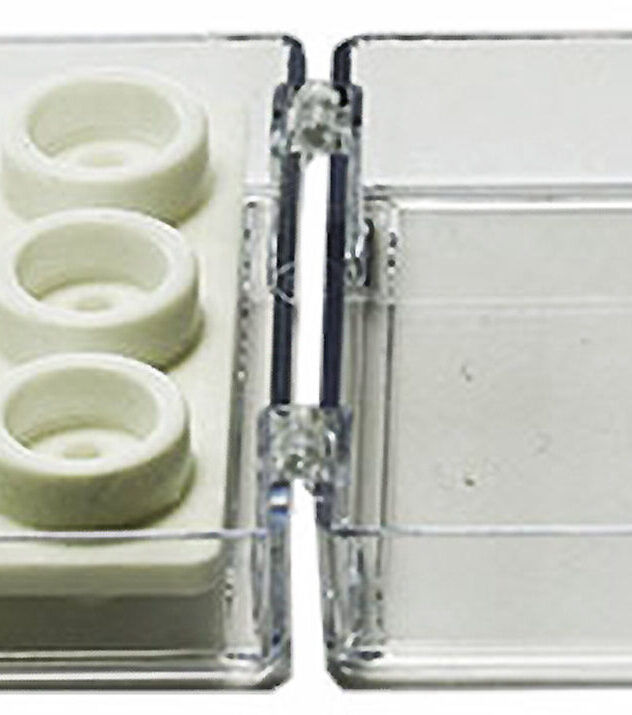
- Toothbrushes and kitchen utensils
- Toys
- Medical instruments
- Household appliances
The technique is versatile and suitable for both small and large series.
Conclusion
Injection molding is a fast, efficient, and versatile production method that allows you to create large volumes of plastic products in almost any desired shape. The right choice of mold, machine, and plastic material determines the quality, functionality, and cost-efficiency of your product.
Need your product developed?
Do you have a product idea or want a quick price estimate? Contact us and we will assist you right away.