Is injection molding expensive? An overview of costs and investments
Injection molding is often seen as a costly production process, but in reality, the price depends heavily on various factors. Both fixed investments, such as the mold, and variable costs for material, assembly, and shipping together determine the final cost per product. In this blog, we clearly explain how these costs are structured and how you can maintain control over your total production budget by making the right choices.
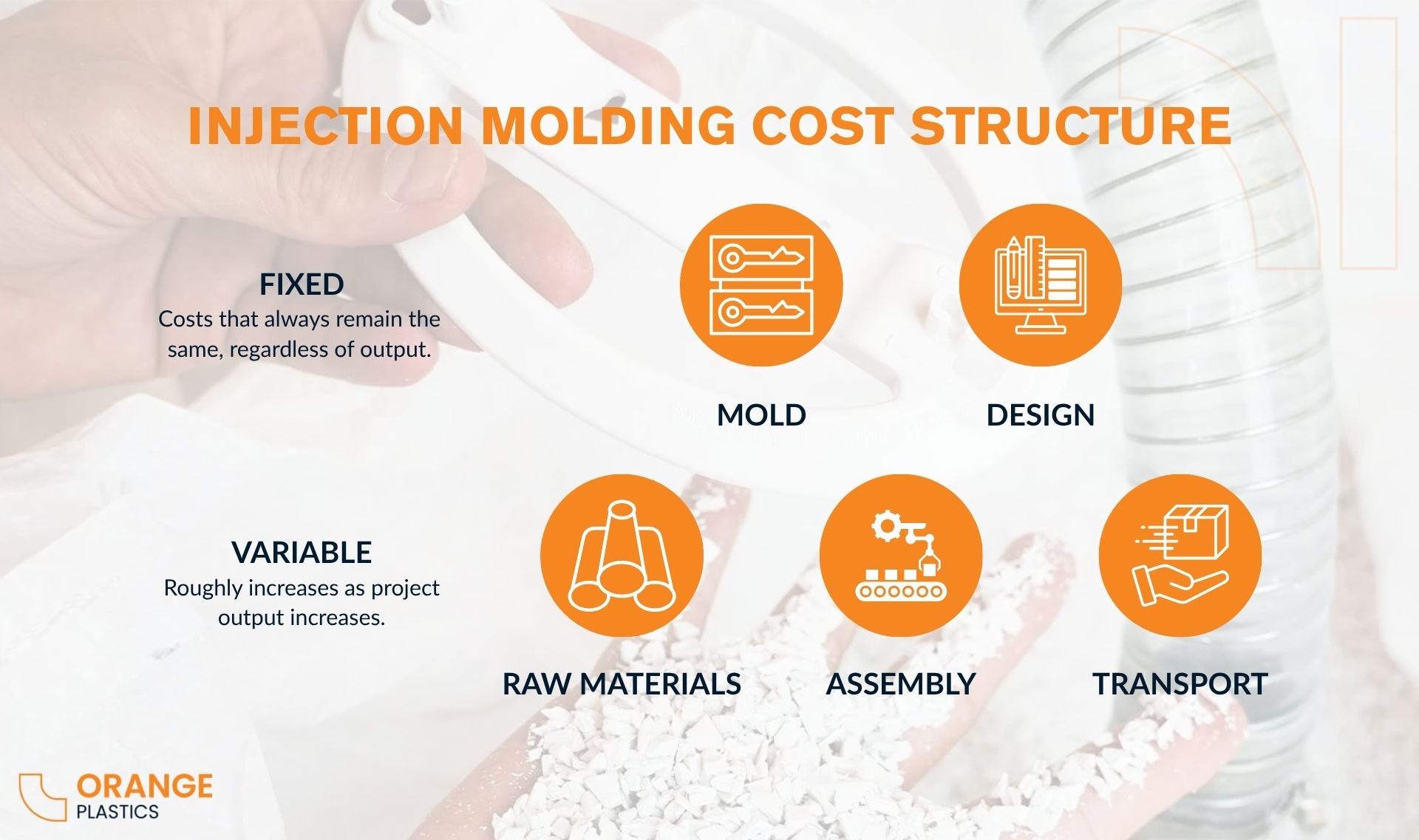
An overview of the fixed and variable costs of injection molding.
Summary
- Injection molding is not automatically expensive; costs depend on fixed and variable factors.
- Molds constitute the largest fixed costs and depend on volume and complexity.
- Variable costs, such as material and assembly, increase with the number of products.
- Material choice and design optimization largely determine the cost per unit.
- For larger volumes, a good cost estimate and optimization ensure lower total costs.
Watch video
Table of contents
Fixed costs: the investment in molds
One of the largest one-time costs in plastic injection molding is the mold, which varies significantly depending on product complexity and production volume. Choosing the right mold is crucial, as it determines the quality of the end product and influences the average cost per unit. In the following sections, we explain where the costs come from and provide examples of simple and complex molds.
Primary investment: the mold
One of the largest one-time cost items in injection molding is the mold. The price depends on:
- Production volume: the number of units you want to produce.
- Product complexity: simple products require simpler molds.
Example 1: simple plastic toy
For a relatively simple product, such as a plastic toy with a production run of 2,000 units, a single-cavity aluminum mold is often sufficient. This mold is inexpensive to produce and suitable for small to medium volumes, where the design is simple and contains few complex details. As a result, fixed costs remain low and the process is efficient.
Example 2: complex remote control
For a complex product, such as a remote control with multiple components and high production volumes, an advanced 12-cavity hardened family mold is required. This mold can produce multiple parts simultaneously and is suitable for large series, ensuring high efficiency and consistent quality. Due to the complexity and volume, the initial mold costs are higher, but the cost per unit decreases with large production runs.
Important point
There is no universal price for molds; every mold is tailored to volume and product complexity. Collaborating with a professional plastic product manufacturer helps in choosing the mold that yields the lowest average fixed costs per product.
Variable costs: materials, assembly, and shipping
In addition to fixed mold costs, there are costs that increase with every produced product, such as materials, assembly, and shipping. These variable costs, combined with the initial investment, determine the total production costs per unit.
1. Material costs
Material costs depend on the following components:
- The type of plastic (PE, PP, ABS, etc.)
- Prices vary from approximately $1.50 to $8 per kilogram
- Properties such as flexibility, durability, and resistance to heat or chemicals influence the material choice
2. Assembly costs
Assembly costs depend on the number of steps and the complexity of the product. Extra tooling or labor can further increase these costs. By planning the assembly process efficiently, you can reduce the costs per product.
3. Shipping costs
Shipping costs include the transport of products to the customer, both locally and worldwide. They are influenced by the type of packaging, logistics, and distance. Efficient planning can help limit these costs without affecting the delivery or safety of the products.
How do you determine the total production costs?
Every production is unique. Both fixed and variable costs depend entirely on the specific product and production volume. The first step is always requesting a detailed cost estimate from a reliable injection partner.
- Request a quote that specifies fixed and variable costs separately.
- Compare options for molds, materials, and assembly.
- Optimize your design to lower the cost per unit.
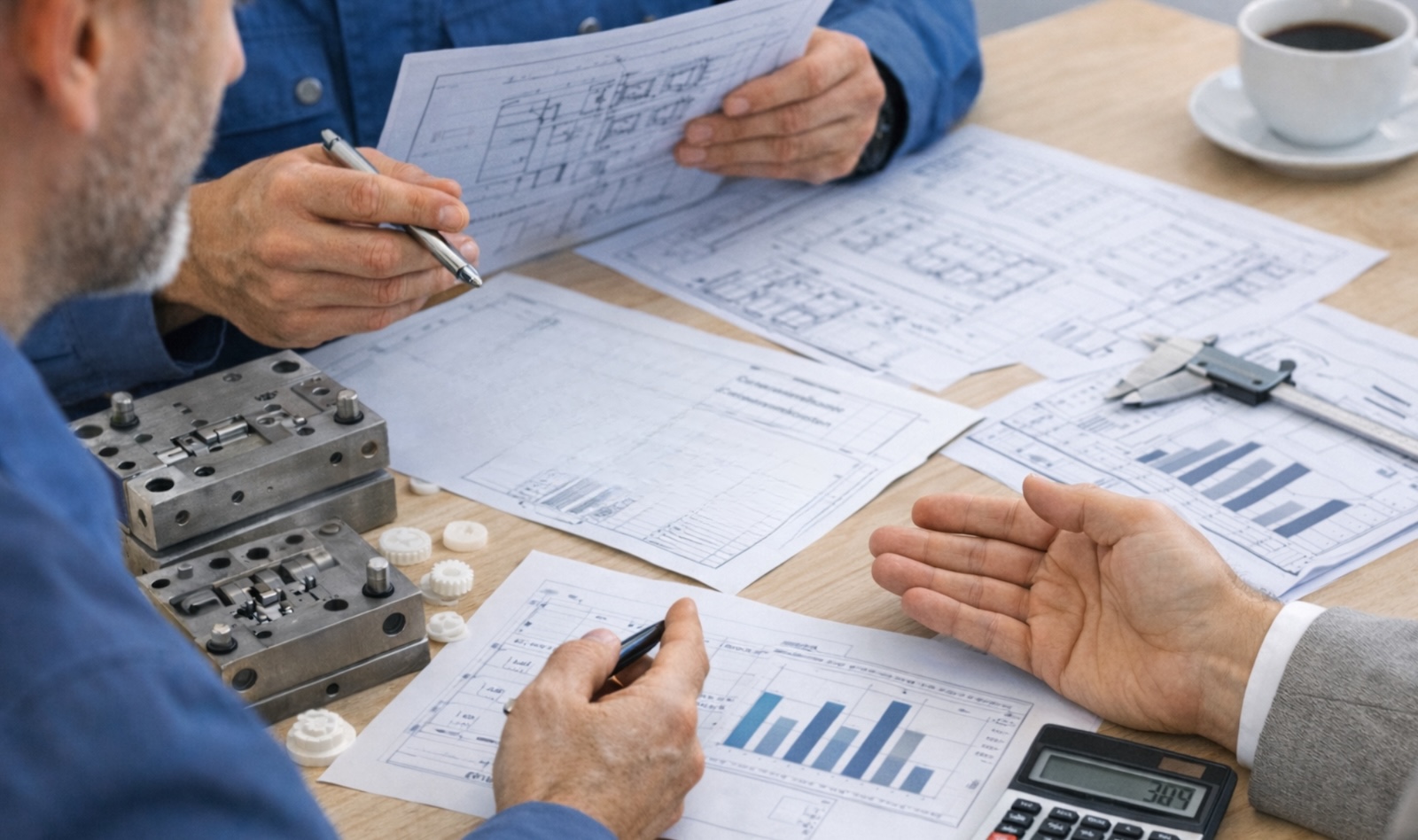
During the mold development phase, we do everything possible to deliver a beautiful and strong end product.
Conclusion
Injection molding can be a significant investment, but the exact costs depend on:
- Fixed costs: molds and design.
- Variable costs: plastic, assembly, and shipping.
By requesting a proper quote in advance and planning the production process carefully, you can effectively control total costs and realize a profitable project.
Considering injection molding for your product? By gaining early insight into costs, materials, and design choices, you avoid surprises and get the most out of your investment. Request a price indication at Orange Plastics and take the first step toward successful production.
Need your product developed?
Do you have a product idea or want a quick price estimate? Contact us and we will assist you right away.