How to Identify Every Type of Plastic
Plastics vary greatly in properties such as density, flexibility, and reaction to heat. Correctly identifying the type of plastic is crucial for recycling, product development, and quality control. In this blog, we discuss three practical tests to identify a plastic product.
Disclaimer
The tests in this article provide an initial impression but are not always 100% reliable. Results may differ from expectations, for example, due to additives in the plastic. Always perform tests safely. Harmful fumes are released during combustion. Not sure? Rely on the expertise of Orange Plastics.
Summary
- You can recognize different types of plastics by performing simple tests.
- In the sink or float test, you determine density by seeing if the plastic sinks or stays afloat.
- With a compression test, you apply pressure to the material to see if it is flexible or rigid.
- In a burn test, you observe how the plastic reacts to fire by noting the flame color, smoke, and smell.
- In this blog, you will read how these tests work and how to recognize types of plastic.
Watch video
Table of contents
1. How does a sink or float test work?
A sink or float test can be used to distinguish between two general groups of plastic. Elements with a low density will float, while all other plastics sink due to their high density.
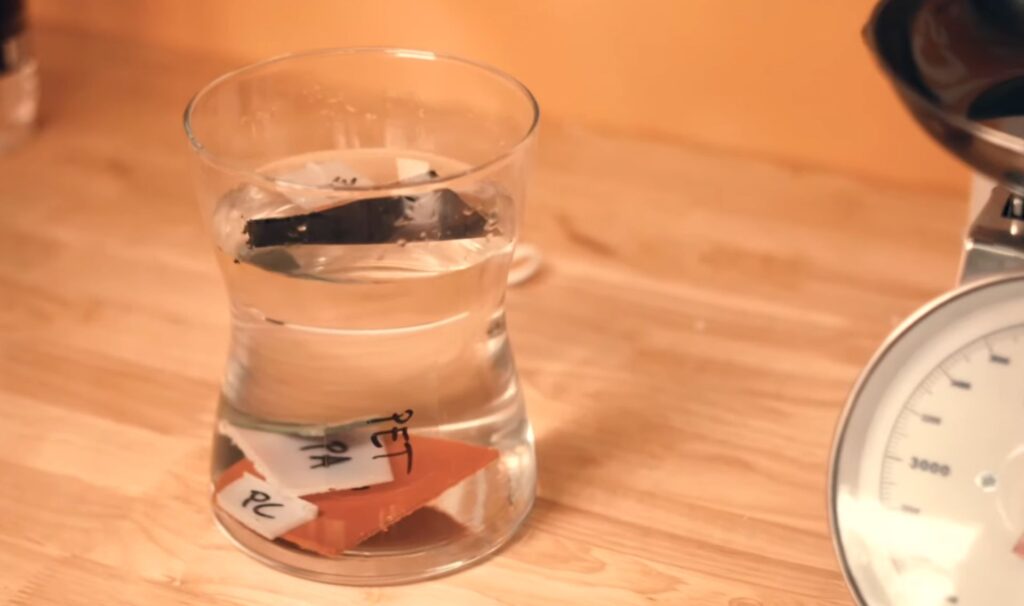
An example of a sink or float test.
How it works
You fill a container with water and drop the plastic in. Based on whether the material floats or sinks, you can estimate the type of plastic.
- Plastics with a higher density sink, such as ABS (Acrylonitrile Butadiene Styrene), PA (polyamide), PC (polycarbonate), POM (polyoxymethylene), and PET (polyethylene terephthalate).
- Plastics with a low density stay afloat, such as PE (polyethylene) and PP (polypropylene).
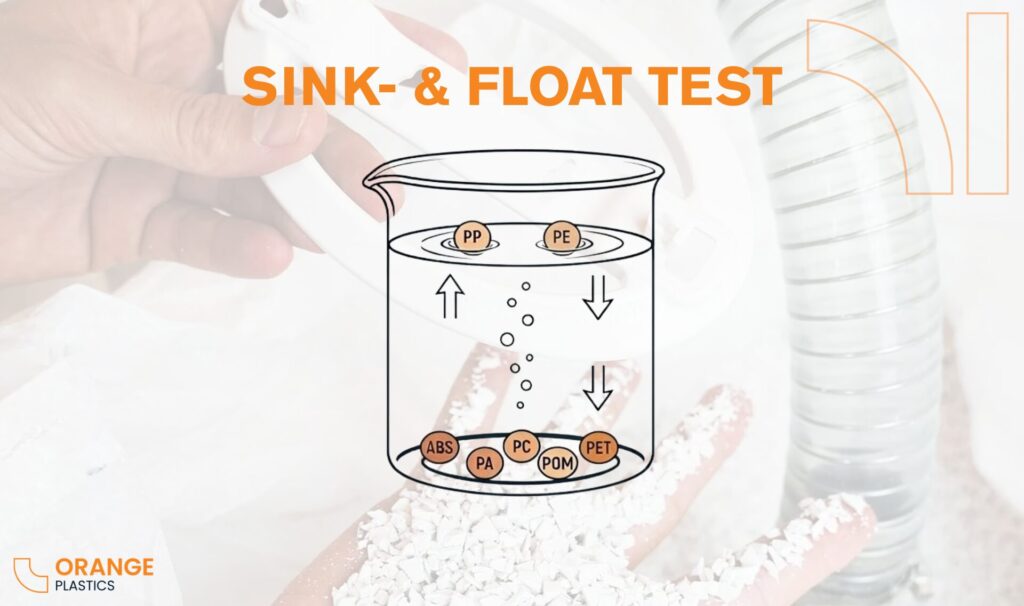
Overview of plastic types that sink or float.
2. How does a compression test work?
Plastics react differently to high pressure. Flexible plastics withstand high pressure, while others bend or sometimes even break. By performing a compression test with a compressor, you can determine the plastic type of a product.
How it works
Using a compressor, force is applied to the material to see if it deforms, bends, or breaks. Based on this reaction, you can better recognize the type of plastic.
- Some plastics, such as POM, (partially) return to their original shape after deformation.
- Flexible plastics bend without breaking, such as PE, PP, PA, and PC.
- Rigid plastics can break under pressure, such as ABS.
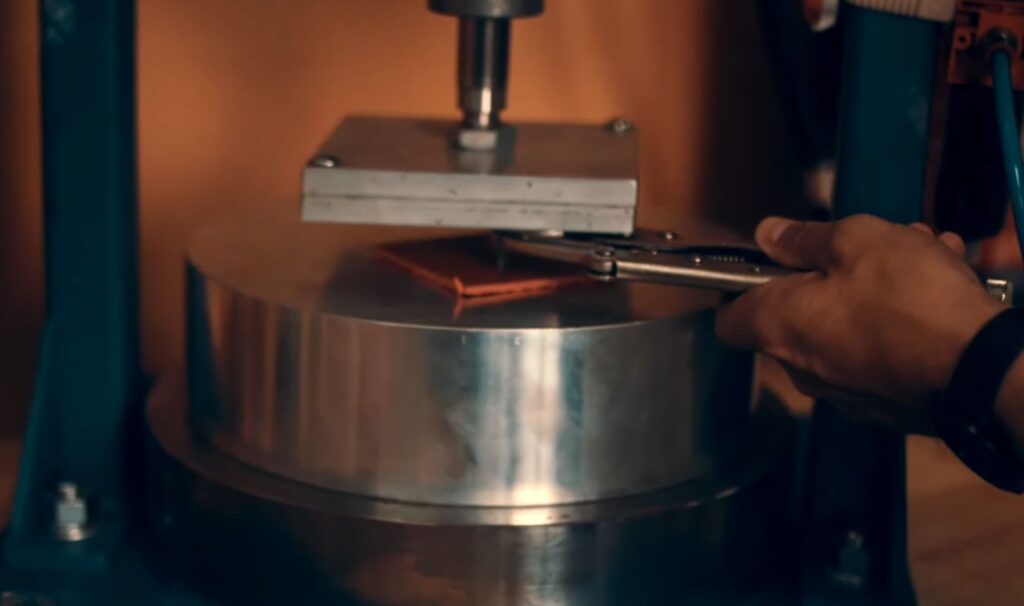
An example of a compression test.
3. How does a burn test work?
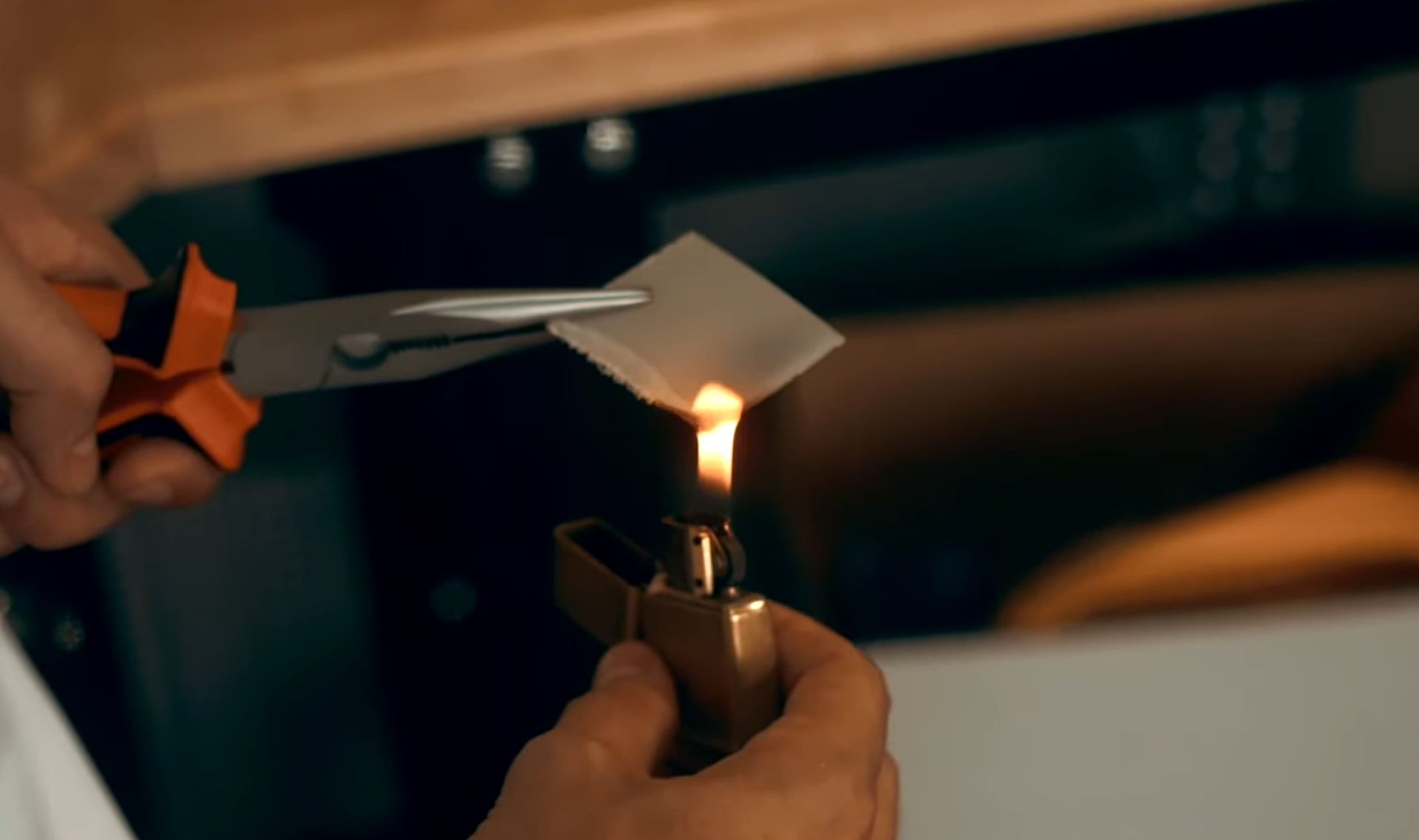
You can identify a type of plastic by applying intense heat to it. Pay attention to the speed at which the plastic catches fire, the color of the flame, and the effect of the heat on the plastic. The reaction of the plastic is key.
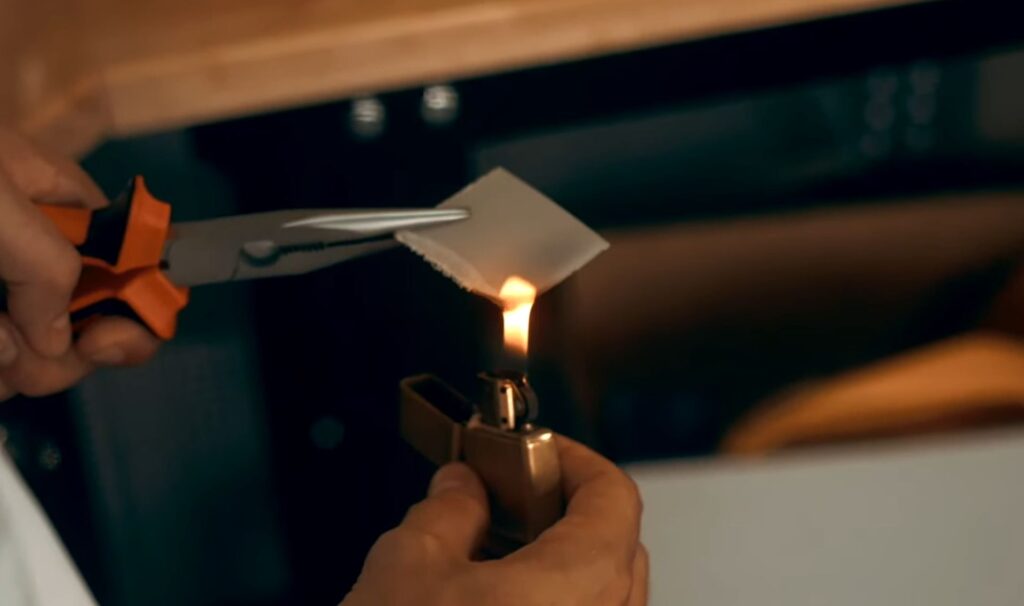
An example of how a burn test works.
How it works
During a burn test, you ignite a small piece of plastic and then observe the behavior and the smell. Plastics react differently to heat, which is visible in the flame color, smoke development, and odor. The image and table below explain what happens per plastic type.
| Plastic type | Flame & smoke | Odor/effect |
| PE | Light yellow flame with blue core | Candle-like, waxy effect |
| PP | Light yellow flame with blue core | Oily substance |
| ABS | Yellow flame | Thick smoke and soot |
| PA | Blue flame with yellow layer | Similar to burning wool |
| PC | Puffs of smoke | Sweet scent |
| POM | Almost invisible flame | Strong formaldehyde odor |
| PET | Yellow and smoky flame | Sweet scent |
Safety first
It is important that safety comes first during the burn test. Therefore, always ensure that you prepare and carefully execute the following points:
- Wear protective clothing and ensure sufficient ventilation.
- When in doubt, always consult an injection partner or laboratory for accurate identification.
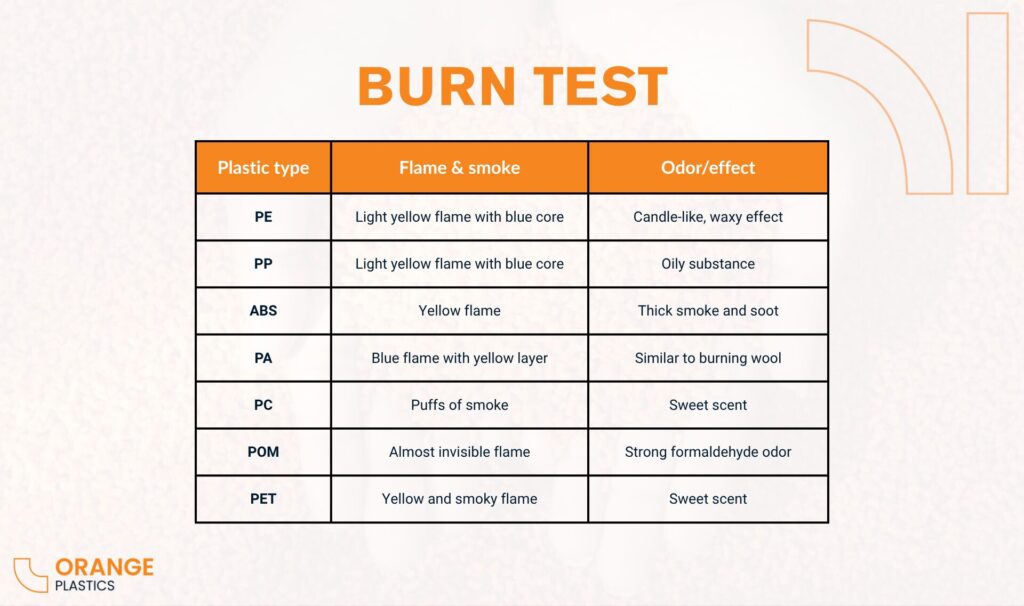
A table showing the reactions of different types of plastic during a burn test.
Conclusion
With three simple tests, you can better identify the type of plastic:
- Sink or float test to determine density.
- Compression test to assess flexibility and sturdiness.
- Burn test to analyze flame color, smoke, and smell.
These methods can be performed at home (with the proper safety measures) or professionally.
Pay close attention to how the material reacts during the tests. This allows you to identify the plastic more accurately, which helps with recycling, product development, and quality management.
Need your product developed?
Do you have a product idea or want a quick price estimate? Contact us and we will assist you right away.